Rhinodoras dorbygnyi
On this page11 sections
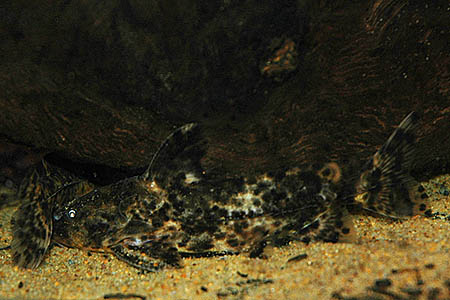
Quick facts
Difficulty4 of 8 measures
More bars, more demanding. Hardiness is not averaged with the rest.
- Space
- large tank
- Water
- mild adjustment
- Temp
- unfussy
- Diet
- unknown
- Temperament
- predatory
- Social
- unknown
- Compatibility
- unknown
Hardiness on its own can raise the rating, whatever the measures above say.
- Hardiness
- unknown
At present there's not a great deal of information available regarding this species. It seems to be fairly easy to keep, and makes a nice, unusual addition to larger community tanks.
Distribution
Habitat
Slow-moving and standing waters including tributaries, creeks and swamps. It's usually found sheltering among roots or submerged vegetation.
Aquarium size
It will need at a tank measuring at least 120 ∗ 60 ∗ 60 cm48 ∗ 24 ∗ 24 in - ~432 litres~114 US gal as an adult.
Maintenance
It's a shy, nocturnal species so it's best to keep the tank dimly-lit. Provide plenty of hiding places in the form of clay flowerpots, lengths of plastic piping, tangles of driftwood etc. Plants aren't essential but are useful in cutting out the amount of light hitting the bottom of the tank and providing extra cover.
If you buy one of these for your community tank you'll probably find it will head straight for an area of cover and remain there during the hours of daylight. If you want to see it more often, consider installing a red light above the tank. It can't see red lightwaves, so if you switch this on at night you should be able to observe it foraging for food. It usually becomes much bolder as it grows, and adult specimens will often cruise the tank whether the lights are on or not.
Water conditions
Temperature: 20 – 25 °C68 – 77 °F
pH: 6.0 to 7.0
Hardness: 5 to 12°H
These recommendations come from this profile’s own figures. They contain affiliate links, so we may earn a commission.
Diet
Omnivorous and easy to feed. Use a good quality sinking pellet or tablet as the staple diet. Supplement this with live and frozen foods such as bloodworm, small earthworms and similar. When first introduced it may only feed after lights out, and food should be added accordingly. Once settled most will learn to come out and forage around at feeding time.
Behaviour and compatibility
Totally unaggressive but it will eat smaller fish so isn't really suitable for the general community. It can be kept with most peaceable species that are too big too be considered food, including medium to large-sized characins, cyprinids, anabantoids, livebearers, cichlids and other non-territorial catfish.
It's tolerant of conspecifics and a group can usually be kept without any problems. If several are present they'll often share the same refuge during the day. While some jostling for position might occur, no physical damage is usually done.
Sexual dimorphism
Unknown.
Reproduction
Unreported in the hobby.
Notes
At present there's not a great deal of information available regarding this species. It seems to be fairly easy to keep, and makes a nice, unusual addition to larger community tanks.
Species images · 2
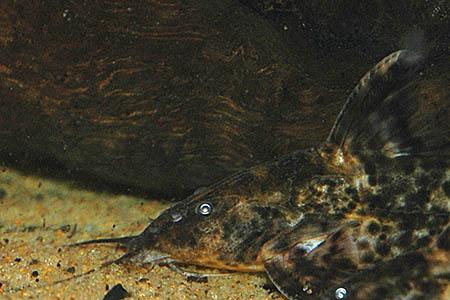
Used with the photographer’s permission. Not licensed for reuse.
Profile completeness17 of 24
71% complete
Also missing: a recorded distribution, taxonomic authority, a common name, etymology.
Community
Questions about Rhinodoras dorbygnyi?
Ask on Discord