River
Curuá
Only species with a profile on Seriously Fish are counted.
- Species
- 3
- Families
- 3
- Photographed
- 3 of 3
- Difficulty rated
- 3 of 3
Basin
Also in the Amazon basinspecies recorded from both
Shares fishes with rivers elsewherespecies recorded from both
Runs through
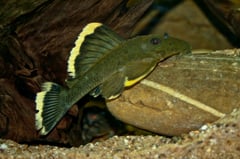
Baryancistrus chrysolomusMango Pleco
Loricariidae · Rapp Py-Daniel, Zuanon & Ribeiro de Oliveira, 2011
The mango pleco, Baryancistrus chrysolomus, traded as L047, is a loricariid endemic to the rio Xingu basin in Pará state, Brazil. A broad, usually yellowish band along the edges of the dorsal and caudal fins throughout life separates it from B. xanthellus, whose bands shrink to tips in adults. It grows to around 220 mm SL, and males in particular become highly intolerant of conspecifics as they age.
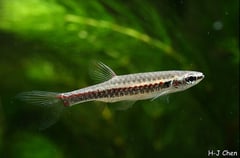
Copella nattereri
Lebiasinidae · (Steindachner, 1876)
Copella nattereri is a small lebiasinid widespread in the middle and upper Amazon drainage in Peru and Brazil. It is sometimes traded as C. sp. 'red line', 'spotted tetra' or C. nigrofasciata, and its name was long applied to C. callolepis and C. meinkeni. Of the three it alone has a dark lateral stripe, and it has no more than three rows of red spots on the flanks. It inhabits forest streams and flooded forest.

Hyphessobrycon heterorhabdusFlag Tetra
Characidae · (Ulrey, 1894)
The flag tetra, Hyphessobrycon heterorhabdus, is a characid from Pará and Maranhão states in eastern Brazil, also known as 'Belgian flag tetra'. Its name has been misapplied to similar fishes across much of the Amazon, the Orinoco and the Guianas, and the true species may reach no further upstream than the rio Tapajós. It lives almost exclusively in small, shaded forest streams called igarapés.