River
Yuan
Only species with a profile on Seriously Fish are counted.
- Species
- 4
- Families
- 4
- Photographed
- 4 of 4
- Difficulty rated
- 4 of 4
Basin
Also in the Yangtze basinspecies recorded from both
Shares fishes with rivers elsewherespecies recorded from both
Runs through
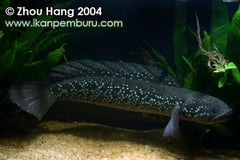
Channa asiaticaChinese Snakehead
Channidae · (Linnaeus, 1758)
The Chinese snakehead, Channa asiatica, is a snakehead native to central and southern China and northern Vietnam. One of several Channa lacking pelvic fins, it is told apart from them by vertical black bars on a brownish body and numerous white spots on the body and fins. It is best kept in a species tank. Pairs build no bubble nest, and both parents defend several thousand floating eggs and the fry.

Macropodus ocellatusRoundtail Paradise Fish
Osphronemidae · Cantor, 1842
The roundtail paradise fish, Macropodus ocellatus, is a labyrinth fish with an enormous range in China, Korea and Japan, north to the Amur River. It lives in ditches, rice paddies, marshes and river backwaters, where winter can freeze the surface and drop the water to 3 °C. It is sometimes referred to as M. chinensis in older literature, a name now considered a synonym of M. opercularis. Males are territorial when breeding and build bubble nests.
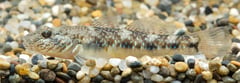
Rhinogobius similis
Gobiidae · Gill, 1859
Rhinogobius giurinus is a goby found through much of China, plus Taiwan, the Korean Peninsula, Japan and the Red and Pha river basins in Vietnam. It appears to exist in a number of forms that differ in colour pattern, morphology or both, and it is unclear whether all of them are conspecific. Newly-imported wild fish tend to be aggressive towards conspecifics, so unlike most Rhinogobius it is best kept in sexed pairs.

Garra imberba
Cyprinidae · Garman, 1912
Garra imberba is a cyprinid without barbels from the upper Yangtze, Mekong and Red River basins in southern China, and the upper Red in Vietnam. Records from the Salween system result from confusion with the similarly-named G. imberbis. With G. micropulvinus it is placed in the Semilabeoina, for which the name Ageneiogarra has been suggested. It tends to inhabit swiftly-flowing headwaters and tributaries.