Results for “species”
Type a name: scientific, common, or one a species used to go by. Or narrow the catalogue with the filters.
Filters
Taenioides cirratusBearded Worm Goby
authority not recorded
Max length300mm SL12in SLTanknot recordedTemp22–27°C72–81°FpH7.5–8.5Something for the true oddball enthusiast, this bizarre looking goby has been imported at least once over the last few years. It's a mud-burrowing species that digs networks of sloping tunnels in the substrate in nature. Apparently each series of burrows has several openings, one of which has a mound outside. According to Itani and Uchino (2003), this mound suggests that the fish "actively process sediment". Even more odd is its appearance (see picture). It has greatly reduced eye...
Tanganicodus irsacae
authority not recorded
Max length70mm SL2.8in SLTank75 × 30cm30 × 12inTemp24–28°C75–82°FpH8.0–9.0This is one of the so-called Tanganyikan Goby Cichlids. They occur only in the upper few feet of water around rocky shores, also known as the surge zone, where they scrape algae from the rocks with their specialised teeth. This habitat is typified by breaking waves and strong currents. They have a few adaptations allowing them to inhabit such an environment. The swim bladder is rendered useless to reduce their buoyancy. They also have a longand a laterally compressed body shape to allow them to ...
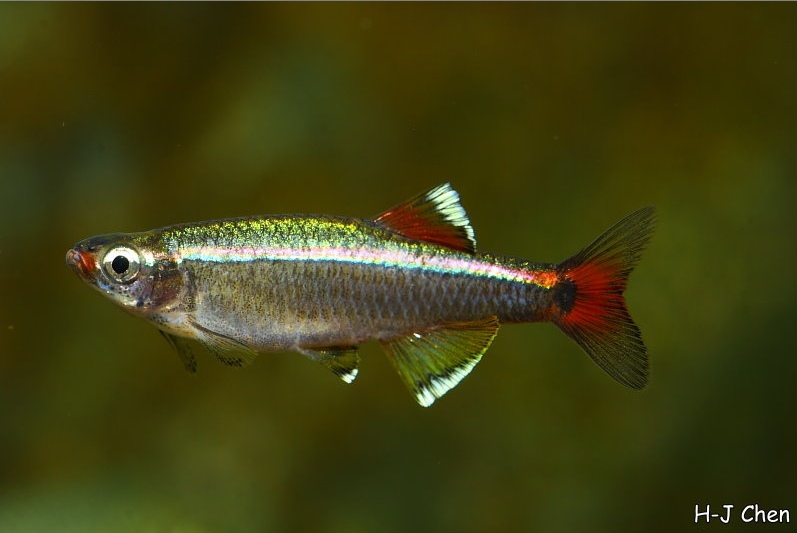
Tanichthys albonubesWhite Cloud Mountain Minnow
Lin, 1932
Max length40mm SL1.6in SLTank60 × 30cm24 × 12inTemp14–22°C57–72°FpH6.0–8.5One of the most ubiquitous species in the hobby and several ornamental strains are available including 'long-finned', 'golden', 'albino', and 'super red', for which care is identical to that of the 'standard' fish. Unfortunately the degree of inbreeding amongst farm-bred stock has resulted in a situation whereby many of the fish available today are genetically weak and prone to disease or develop physical deformities.
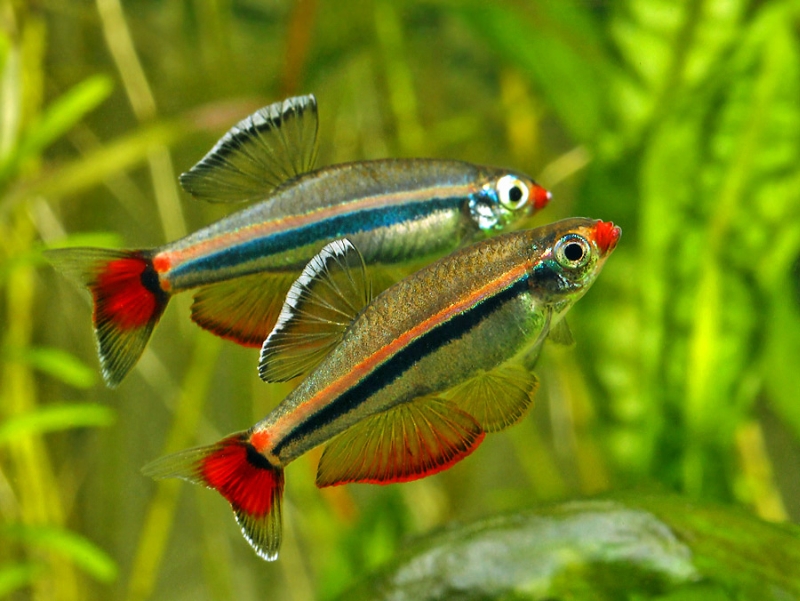
Tanichthys micagemmae
Freyhof & Herder, 2001
Max length30mm SL1.2in SLTank45 × 30cm18 × 12inTemp18–23°C64–73°FpH6.5–7.5This species only became available in the aquarium hobby during the early 21st century but has already achieved a measure of popularity since it's attractive, easy to maintain and usually quite cheaply-priced. You may see it on sale under various trade names including 'Vietnamese minnow', 'cardinal minnow', 'royal white cloud', 'dwarf cardinal' and others. We've obtained images of what is said to be a naturally-occurring form with extremely elong...
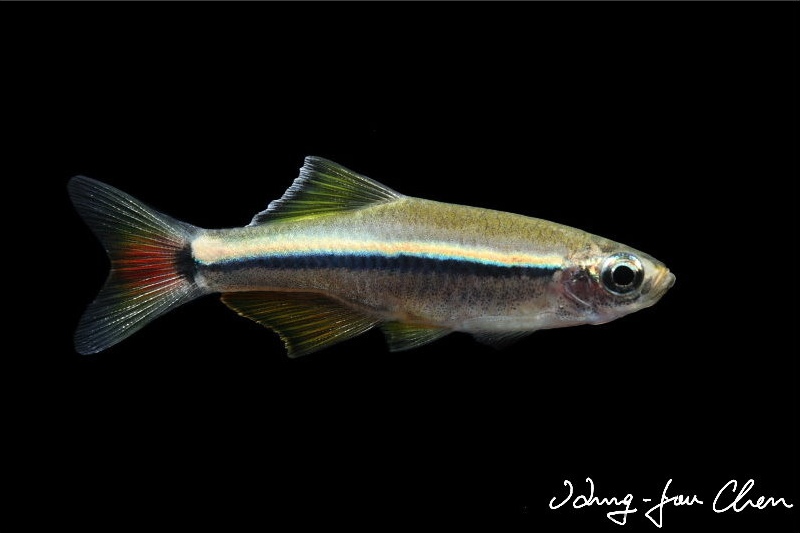
Tanichthys sp. 'Vietnam'
authority not recorded
Max length30mm SL1.2in SLTank45 × 30cm18 × 12inTemp18–25°C64–77°FpH6.0–7.5This fish was first collected in 2009 and limited numbers have been available in the aquarium trade. Though additional exports may be unlikely it's proven easy to breed in captivity and there's a fair chance it will become established in the hobby. It's sold under several names including T. sp. 'lemon' or 'yellow white cloud', and has also been misidentified as the congener T. thacbaensis, a valid species occurring much further north in Vietnam.
Tateurndina ocellicaudaPeacock Goby
authority not recorded
Max length75mm SL3.0in SLTank45 × 30cm18 × 12inTemp22–26°C72–79°FpH6.5–7.5This beautiful little fish is not actually a goby, it's a member of the Eleotridae family, commonly known as sleepers or gudgeon. Members of this family lack the fused pectoral fins of true gobies. This species is one of the smallest and most attractive in the family, and makes an ideal resident of the planted community tank....
Tetraodon baileyiHairy Puffer
authority not recorded
Max length120mm SL5in SLTank75 × 30cm30 × 12inTemp23–27°C73–81°FpHnot recordedPuffer fish are so called as they have the ability to inflate their elastic stomachs with water or air. This is usually a response to some kind of threat, although in the aquarium many specimens appear to inflate themselves for no apparent reason. The fish becomes 2 or 3 times it's normal size, which makes the fish both big enough to scare away many potential predators, and difficult to swallow. Many parts of the body of puffers contain the deadly neurotoxin tetrodoxin. This is the same ...
Tetraodon biocellatusFigure Eight Puffer
authority not recorded
Max length80mm SL3.1in SLTank75 × 30cm30 × 12inTemp22–26°C72–79°FpH6.5–7.5Puffer fish are so called as they have the ability to inflate their elastic stomachs with water or air. This is usually a response to some kind of threat, although in the aquarium many specimens appear to inflate themselves for no apparent reason. The fish becomes 2 or 3 times its normal size, big enough to scare away many potential predators, or difficult to swallow. Puffers also have several other interesting adaptations. They are one of the few fish that can actually blink or close their ...
Tetraodon cochinchinensisFang's Puffer
authority not recorded
Max length70mm SL2.8in SLTank45 × 30cm18 × 12inTemp24–28°C75–82°FpH6.5–7.8Puffer fish are so called as they have the ability to inflate their elastic stomachs with water or air. This is usually a response to some kind of threat, although in the aquarium many specimens appear to inflate themselves for no apparent reason. The fish becomes 2 or 3 times it's normal size, which makes the fish both big enough to scare away many potential predators, and difficult to swallow. Many parts of the body of puffers contain the deadly neurotoxin tetrodoxin. This is the same ...
Tetraodon fluviatilisGreen Puffer
authority not recorded
Max length170mm SL7in SLTank120 × 30cm48 × 12inTemp24–28°C75–82°FpH7.8–9.0Puffer fish are so called as they have the ability to inflate their elastic stomachs with water or air. This is usually a response to some kind of threat, although in the aquarium many specimens appear to inflate themselves for no apparent reason. The fish becomes 2 or 3 times its normal size, big enough to scare away many potential predators, or difficult to swallow. Puffers also have several other interesting adaptations. They are one of the few fish that can actually blink or close their ...
Tetraodon lineatusFahaka Puffer
authority not recorded
Max length430mm SL17in SLTanknot recordedTemp24–26°C75–79°FpH6.5–7.5Puffer fish are so called as they have the ability to inflate their elastic stomachs with water or air. This is usually a response to some kind of threat, although in the aquarium many specimens appear to inflate themselves for no apparent reason. The fish becomes 2 or 3 times it's normal size, big enough to scare away many potential predators, or difficult to swallow. Puffers are also one of the few fish that can actually blink or close their eyes. Many parts of the body of puffers cont...
Tetraodon mbuGiant Puffer
authority not recorded
Max length750mm SL30in SLTank240 × 90cm96 × 36inTemp24–26°C75–79°FpH7.0–8.0Puffer fish are so called as they have the ability to inflate their elastic stomachs with water or air. This is usually a response to some kind of threat, although in the aquarium many specimens appear to inflate themselves for no apparent reason. The fish becomes 2 or 3 times its normal size, big enough to scare away many potential predators, or difficult to swallow. Puffers also have several other interesting adaptations. They are one of the few fish that can actually blink or close their ...
Tetraodon miurusCongo Puffer
authority not recorded
Max length150mm SL6in SLTank75 × 30cm30 × 12inTemp24–28°C75–82°FpH6.8–7.5Puffer fish are so called as they have the ability to inflate their elastic stomachs with water or air. This is usually a response to some kind of threat, although in the aquarium many specimens appear to inflate themselves for no apparent reason. The fish becomes 2 or 3 times its normal size, big enough to scare away many potential predators, or difficult to swallow. Puffers also have several other interesting adaptations. They are one of the few fish that can actually blink or close their ...
Tetraodon nigroviridisGreen Spotted Puffer
authority not recorded
Max length170mm SL7in SLTank120 × 30cm48 × 12inTemp24–28°C75–82°FpH7.5–8.5Puffer fish are so called as they have the ability to inflate their elastic stomachs with water or air. This is usually a response to some kind of threat, although in the aquarium many specimens appear to inflate themselves for no apparent reason. The fish becomes 2 or 3 times it's normal size, which makes the fish both big enough to scare away many potential predators, and difficult to swallow. Many parts of the body of puffers contain the deadly neurotoxin tetrodoxin. This is the same ...
Tetraodon palembangensisHumpback Puffer
authority not recorded
Max length195mm SL8in SLTank120 × 30cm48 × 12inTemp24–28°C75–82°FpH6.8–7.6Puffer fish are so called as they have the ability to inflate their elastic stomachs with water or air. This is usually a response to some kind of threat, although in the aquarium many specimens appear to inflate themselves for no apparent reason. The fish becomes 2 or 3 times it's normal size, which makes the fish both big enough to scare away many potential predators, and difficult to swallow. Many parts of the body of puffers contain the deadly neurotoxin tetrodoxin. This is the same ...
Tetraodon suvattiiArrowhead Puffer
authority not recorded
Max length150mm SL6in SLTanknot recordedTemp22–26°C72–79°FpH6.5–7.5Puffer fish are so called as they have the ability to inflate their elastic stomachs with water or air. This is usually a response to some kind of threat, although in the aquarium many specimens appear to inflate themselves for no apparent reason. The fish becomes 2 or 3 times its normal size, big enough to scare away many potential predators, or difficult to swallow. Puffers also have several other interesting adaptations. They are one of the few fish that can actually blink or close their ...
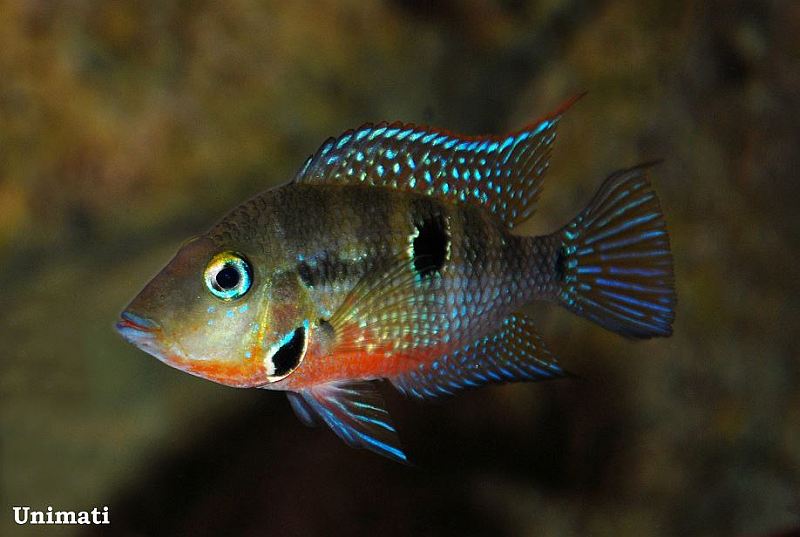
Thorichthys meekiFiremouth Cichlid
Brind, 1918
Max length120mm SL5in SLTank120 × 30cm48 × 12inTemp20–32°C68–90°FpH6.5–8.5This species has been a popular aquarium fish for a considerable period and virtually all fish traded are now raised commercially for the purpose. It is easily identified by the characteristic bright red or orange underside of the head, which is more pronounced in adults. Following Miller and Taylor (1984), the genus Thorichthys is identified...
Toxotes chatareusLargescale Archerfish
authority not recorded
Max length400mm SL16in SLTank120 × 60cm48 × 24inTemp25–30°C77–86°FpH7.0–8.0The Largescale Archerfish is one of a fascinating group of fish that have evolved this very distinctive feeding pattern. The family contains six species, of which toxotes jaculatrix is the most commonly available (sometimes sold incorrectly as t. jaculator). Toxotes chatareus is offered for sale in the UK although much less frequently. There are reports that juvenile archers can be kept in fresh water but it is recommended that a brackish setup is always used. Eaten as a food fish in many...
Toxotes jaculatrixBanded Archerfish
authority not recorded
Max length300mm SL12in SLTank120 × 60cm48 × 24inTemp25–30°C77–86°FpH7.0–8.0The Banded Archer fish is one of a fascinating group of fish that have evolved this very distinctive feeding pattern. The family contains six species, of which toxotes jaculatrix is the most commonly available (sometimes sold incorrectly as t. jaculator). Occasionally, the similarly marked toxotes chatareus is offered for sale in the UK although much less frequently. There are reports that juvenile archers can be kept in fresh water but it is recommended that a brackish setup is always used. ...
Trachelyichthys decaradiatus
authority not recorded
Max length80mm SL3.1in SLTank60 × 38cm24 × 15inTemp20–28°C68–82°FpH6.5–7.0Very similar to its congener T. exilis, it can be distinguished by looking at the position of the eye which is set much further forward in exilis. Also, the humeral process (long spine extending from the back of the gill plate), is broader and shorter in this species than exilis. Neither are seen very often in the hobby....