Chalceus erythrurus
Tucanfish
Last revised 2026Edit this page
On this page11 sections
Quick factsEdit
Difficulty3 of 8 measures
- Space
- large tank
- Water
- needs a steady pH
- Temp
- needs a steady temperature
- Diet
- unknown
- Temperament
- unknown
- Social
- unknown
- Compatibility
- unknown
Other demands
Each of these can raise the rating on its own, whatever the measures above say.
- Hardiness
- unknown
Before you buy
Needs a tight-fitting lid as this species is known to jump
Make sure the tank cover is very well-fitting, as it is a renowned jumper.
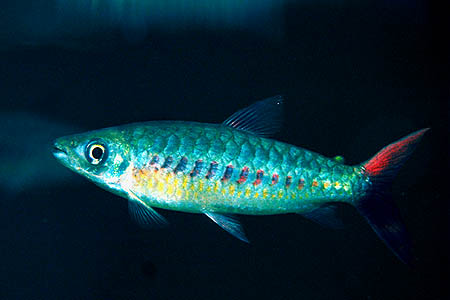
The tucanfish, Chalceus erythrurus, is a large characin from parts of the Amazon basin in Peru and Brazil. It lives in the surface waters of floodplain rivers and lakes. The red or yellow caudal fin separates it from the pink-tailed C. macrolepidotus. Fast and a renowned jumper, it needs a lot of swimming space and a well-fitting cover, and it does best singly or in a group of more than six.
Distribution
EditHabitat
Write a noteEditInhabits surface waters of floodplain rivers and lakes.
Aquarium size
Write a noteEdit120 ∗ 45 ∗ 45 cm48 ∗ 18 ∗ 18 in - ~243 litres~64 US gal should be the smallest tank considered. It's capable of a real turn of speed and can injure itself quite easily in small tanks.
Maintenance
Write a noteEditWater conditions
EditTemperature: 22 – 26 °C72 – 79 °F
pH: 6.0-7.0
Hardness: 5-15°H
These recommendations come from this profile’s own figures. They contain affiliate links, so we may earn a commission.
Diet
Write a noteEditFeeds primarily on insects and aquatic crustaceans in nature. While dried foods are usually accepted, a good proportion of the diet should contain meaty foods such as prawns, mussel, bloodworm, chopped earthworms etc.
Behaviour and compatibility
Write a noteEditIt does best when kept either as a single specimen, or in a group with more than 6 fish. In smaller groups, the fish tend to scrap with one another. Other than this, it is a good addition to many larger communities. Tankmates can include similarly-sized characins such as Leporinus, Metynnis, Mylossoma and Brycon sp., large Loricariids, Pimelodiids, and cichlids such as Geophagus or Satanoperca sp. Try to avoid other surface-dwelling species unless the tank is huge.
Sexual dimorphism
Write a noteEditUnknown.
Reproduction
Write a noteEditNot achieved in the hobby to date. In all likelihood it spawns in a similar fashion to C. macrolepidotus
Notes
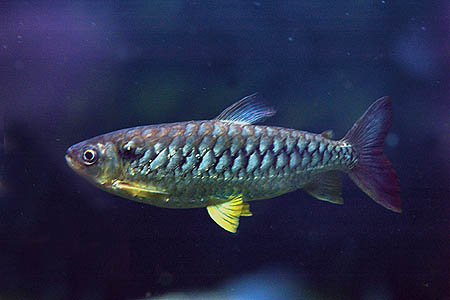
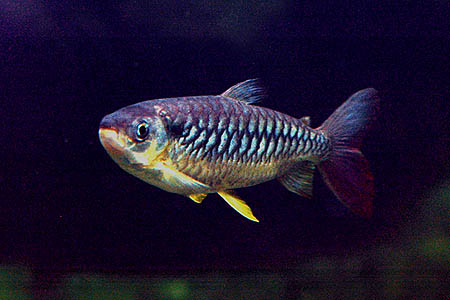
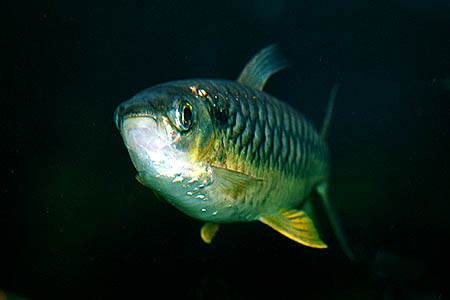
EditThis species can be distinguished from its congener C. macrolepidotus mainly by the red or yellow (as opposed to pink) caudal fin. In addition, it has yellow pectoral and pelvic fins and may also have some yellow colouration on the body. It is seen for sale as often as its relative, although it's quite abundant in nature.
Species images · 5
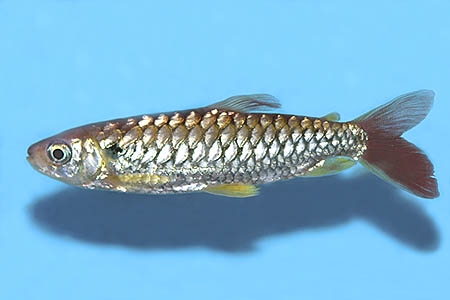
These photographs are used with each photographer’s permission.
Send a photographDistribution
Profile completeness18 of 24
75% complete
Also missing: taxonomic authority, etymology.
Community
Questions about Chalceus erythrurus?
Ask on Discord