Horabagrus nigricollaris
Black Collared Catfish
On this page11 sections
Quick facts
Difficulty4 of 8 measures
More bars, more demanding. Hardiness is not averaged with the rest.
- Space
- large tank
- Water
- tap water
- Temp
- narrow band
- Diet
- unknown
- Temperament
- predatory
- Social
- unknown
- Compatibility
- unknown
Hardiness on its own can raise the rating, whatever the measures above say.
- Hardiness
- unknown
There are only 2 species currently in the genus Horabagrus, with this one being the rarer in the hobby. H. brachysoma is the other, and it resembles H. nigricollaris quite closely. It is a much larger fish and is unsuitable for most home aquaria. Confusion can arise as both are usually sold as juveniles, at around 2-3" in length. They can be told apart by examining the black shoulder markings found on either side of the fish. In H. brachysoma this is no more than a vaguely circular dark blo...
Distribution
Habitat
Apparently, it lives in the stream-like headwaters of the Chalakudy drainage.
Aquarium size
Unsuitable for tanks smaller than 120 ∗ 45 ∗ 45 cm48 ∗ 18 ∗ 18 in - ~243 litres~64 US gal.
Maintenance
It's a nocturnal species, so provide dim lighting and refuges in the form of big chunks of bogwood, tangles of beech branches, large rocks or lengths of plastic piping of a suitable bore. Ensure that any decor is either secured or is too heavy to be moved around by the fish. A large and efficient filter is needed to cope with the amounts of biological waste produced by a fish of this size. Given the fact it originates from hill streams, a good water flow with a high oxygen content would seem appropriate.
Water conditions
Temperature: 23 – 25 °C73 – 77 °F
pH: 5.5-7.5
Hardness: 5-25°H
These recommendations come from this profile’s own figures. They contain affiliate links, so we may earn a commission.
Diet
Most specimens are easy to feed, accepting a wide range of dried and meaty frozen foods. Feed a mixture of dried pellets as well as frozen prawns, mussels, earthworms etc. You may need to add food at lights out to ensure it gets its share, as it can be very secretive.
Behaviour and compatibility
Peaceful for its size and does well in a community of other placid, similarly-sized fish. It will eat any tankmate it can fit in its mouth, so be warned. Decent choices include larger cyprininds and characins, other catfish, cichlids and the smaller species of Polypterus. It will not squabble with conspecifics and can be kept singly or as a small group.
Sexual dimorphism
Unknown.
Reproduction
Unrecorded in aquaria.
Notes
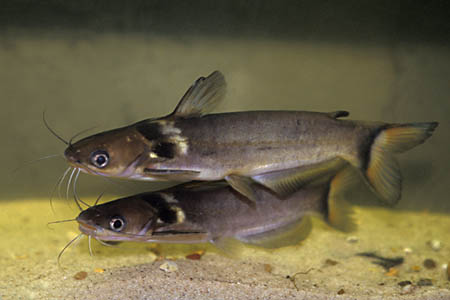
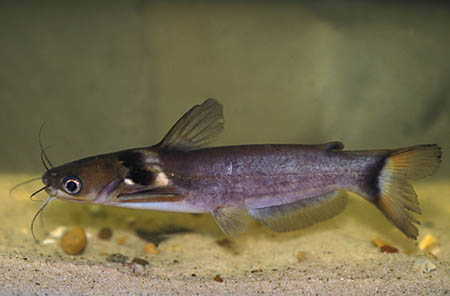
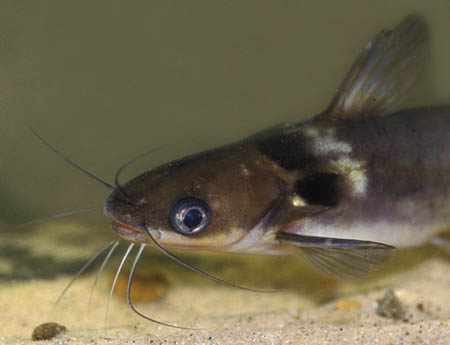
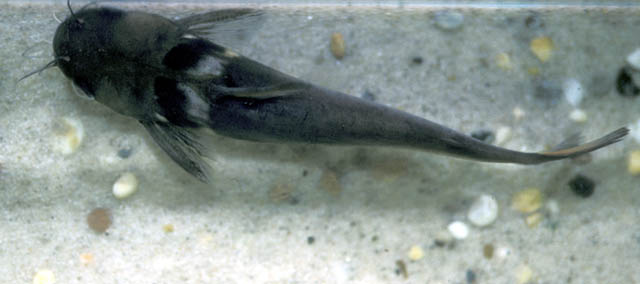
There are only 2 species currently in the genus Horabagrus, with this one being the rarer in the hobby. H. brachysoma is the other, and it resembles H. nigricollaris quite closely. It is a much larger fish and is unsuitable for most home aquaria. Confusion can arise as both are usually sold as juveniles, at around 2-3" in length. They can be told apart by examining the black shoulder markings found on either side of the fish. In H. brachysoma this is no more than a vaguely circular dark blotch. In H. nigricollaris the marking extends up and over the top of the body. This gives the impression the fish is wearing a dark collar, and gave rise to the species name.
Species images · 4
Used with the photographer’s permission. Not licensed for reuse.
Profile completeness18 of 24
75% complete
Also missing: a recorded distribution, taxonomic authority, etymology.
Community
Questions about Horabagrus nigricollaris?
Ask on Discord