Isorineloricaria acuarius
Blue Fin Thresher Pleco · L093 · L195
Formerly Squaliforma villarsi · Isorineloricaria villarsi
Last revised 2026
On this page12 sections
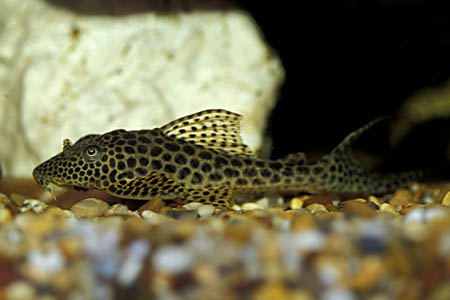
Quick facts
Difficulty4 of 8 measures
- Space
- very large tank
- Water
- flexible
- Temp
- needs a steady temperature
- Diet
- unknown
- Temperament
- peaceful
- Social
- unknown
- Compatibility
- unknown
Other demands
Each of these can raise the rating on its own, whatever the measures above say.
- Hardiness
- unknown
- Needs a very large tank
Isorineloricaria acuarius is a suckermouth catfish from the Apure and middle Orinoco drainages in the Venezuelan Llanos, where it lives on sandy runs in whitewater rivers. Traded as L093 and L195, the blue fin thresher pleco, it was sold as Hypostomus villarsi until it was described in 2016. I. villarsi is a different fish from the Lake Maracaibo basin, with a sharp ridge on each side of the head where I. acuarius has a rounded one.
Etymology
Isorineloricaria: from the Greek isos, meaning 'equal' or 'like', and the generic name Rineloricaria, because its body shape, prominent odontodes and the differences between the sexes strongly recall several Rineloricaria species (Isbrücker, 1980).
acuarius: from the Latin, meaning 'needle maker', in reference to the many long odontodes on breeding males (Ray & Armbruster, 2016).
Distribution
Apure and middle Orinoco drainages in the Venezuelan Llanos. It's known from the río Apure and rivers draining into it, including the Portuguesa, Guanare, Guárico and Orituco, and from the río Arauca. Only one fish has been caught in the main Orinoco, just downstream of the mouth of the Apure (Ray & Armbruster, 2016). Type locality is 'Rio Portuguesa, 3 km northeast of El Barriero, Portuguesa, Venezuela', at about 9.052°N, 69.488°W.
Habitat
It lives in flowing waters running over sandy substrates that are scattered with rocks and stones, and is often found on or around driftwood snags.
Aquarium size
A tank at least 150 cm long is needed, and Südamerikafans recommends 200 cm.
Maintenance
A spacious tank is required, preferably with a sandy substrate. Provide hiding places and shade with some big chunks of driftwood and smooth rocks. Dim lighting is also beneficial. Try to arrange the decor so as much of it is off the tank bottom as possible, as the fish moves with great speed at times, especially when startled. It also needs well-oxygenated water, and an efficient filter to deal with the large amounts of waste it produces.
Water conditions
Diet
An unfussy feeder, it will accept most foods. Offer regular feedings of greens such as cucumber, courgette, blanched spinach etc., as well as live, frozen and dried stuff. It tends to become less of a vegetarian as it grows.
These recommendations come from this profile’s own figures. They contain affiliate links, so we may earn a commission.
Behaviour and compatibility
A peaceful species that can be kept with a variety of tankmates, such as larger characins, cyprinids, peaceful cichlids and other catfish. It's surprisingly non-territorial and can be kept both in a species group or other peaceful Loricariids.
Sexual dimorphism
Unknown.
Reproduction
Unknown.
Notes
It was sold as Hypostomus villarsi until it was described in 2016, and is a rare find in the hobby. If you're lucky enough to see some for sale, check the fish have rounded bellies and that their eyes aren't sunken before you part with any cash, as these are classic signs of emaciation in newly imported Loricariids.
Species images · 3
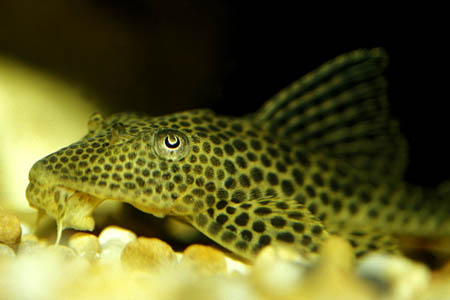
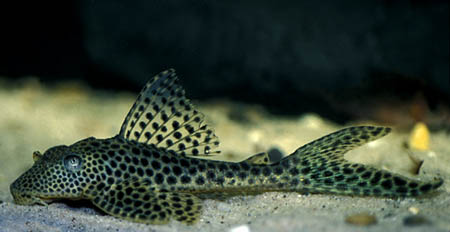
Used with the photographer’s permission. Not licensed for reuse.
How the name has changed
The fish sold as Isorineloricaria villarsi was described as I. acuarius in 2016. I. villarsi is a different fish from the Lake Maracaibo basin.
Squaliforma villarsi moved to Isorineloricaria by Ray and Armbruster 2016
Distribution
Profile completeness19 of 24
79% complete
Also missing: water condition notes.
Community
Questions about Isorineloricaria acuarius?
Ask on Discord