Psalidodon balbus
Formerly Hyphessobrycon balbus Myers, 1927
Last revised 2026Edit this page
On this page5 sections
Quick factsEdit
Difficulty3 of 8 measures
- Space
- small tank
- Water
- unknown
- Temp
- unknown
- Diet
- unknown
- Temperament
- unknown
- Social
- needs to be in a group
- Compatibility
- fine with others
Other demands
Each of these can raise the rating on its own, whatever the measures above say.
- Hardiness
- unknown
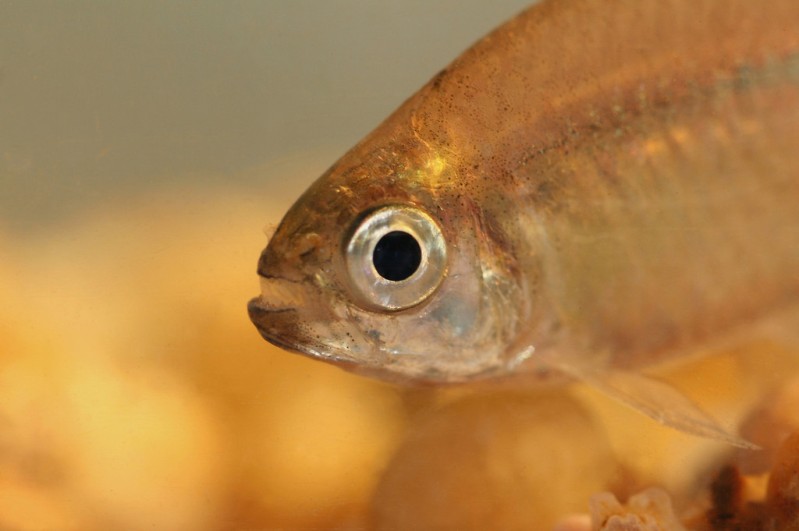
Psalidodon balbus is a small characid known only from upper Paraná basin headwaters in the Federal District and Goiás, central Brazil. Most records come from the rio São Bartolomeu, including the Bananal, Santa Maria-Torto and Gama tributary systems.
Etymology
EditPsalidodon: from the Ancient Greek ψαλίς (psalís), meaning 'scissors', and ὀδούς (odoús), meaning 'tooth'.
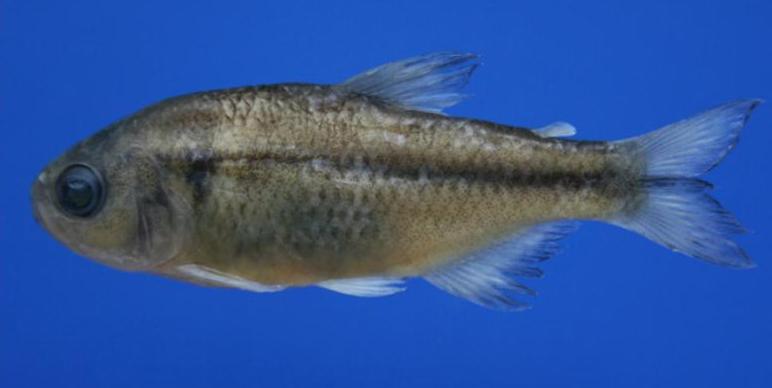
balbus: from the Latin balbus, meaning 'stuttering', in reference to the incomplete lateral line in this species which is described as 'stuttering' in its description.
Distribution
EditKnown only from headwaters of the upper Paraná river basin in the Federal District plus the neighbouring state of Goiás, central Brazil.
Type locality is 'Planaltina, Lagoa Fervedeira, Goiás, Brazil' with additional records existing mostly from the rio São Bartolomeu including the Bananal, Santa Maria-Torto and Gama tributary systems.
Habitat
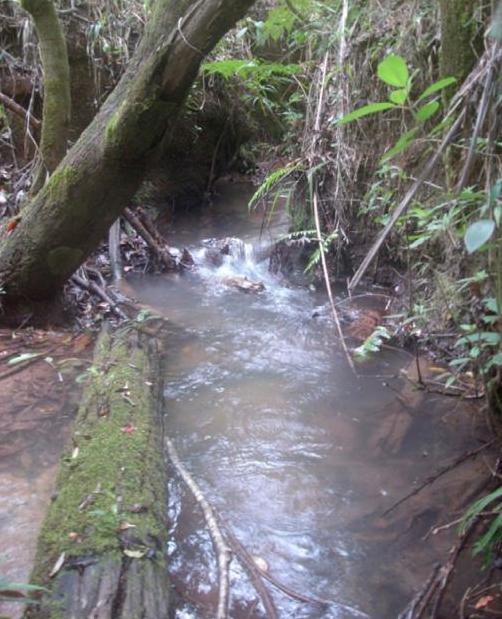
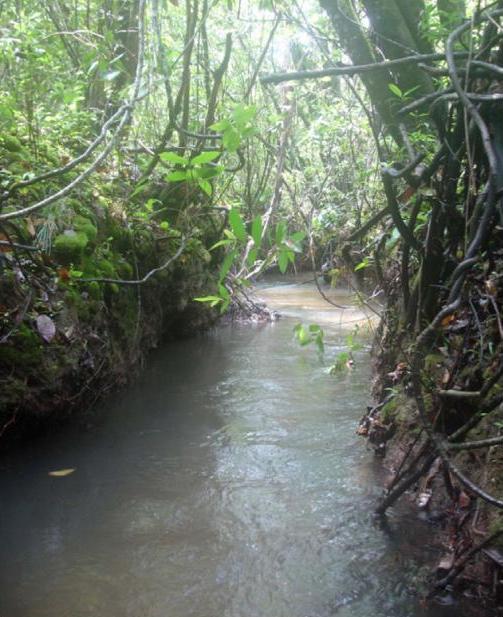
Write a noteEditAt the localities listed in 'Distribution' P. balbus was collected alongside a number of other species including Steindachnerina insculpta, Characidium gomesi, C. xanthopterum, C. zebra, Bryconamericus stramineus, Knodus moenkhausii, Hasemania sp., Astyanax sp., Aspidoras fuscoguttatus, Neoplecostomus corumba, Hypostomus ancistroides, Rhamdia quelen, Rivulus pictus, Phalloceros harpagos, Poecilia reticulata (introduced) and Cichlasoma paranaense.
References
- Aquino, P. P. U. and T. Belisário d`Araújo Couto (2010). Pisces, Teleostei, Characiformes, Characidae, Hasemania crenuchoides Zarske and Géry, 1999, Hyphessobrycon balbus Myers, 1927 and Oligosarcus planaltinae Menezes and Géry, 1983: New records in Distrito Federal, Central Brazil. Checklist 6(4), 594-595
- Myers, G. S. (1927). Descriptions of new South American fresh-water fishes collected by Dr. Carl Ternetz. Bulletin of the Museum of Comparative Zoology 68(3), 107-135
- Calcagnotto, D., S. A. Schaefer, and R. DeSalle (2005). Relationships among characiform fishes inferred from analysis of nuclear and mitochondrial gene sequences. Molecular Phylogenetics and Evolution 36(1), 135-153
- Reis, R. E., S. O. Kullander and C. J. Ferraris, Jr. (eds) (2003). Check list of the freshwater fishes of South and Central America. CLOFFSCA. EDIPUCRS, Porto Alegre, i-xi + 1-729
- Oliveira, C. A., G. S. Avellino, K. T. Abe, T. C. Mariguela, R. C. Benine, G. Orti, R. P. Vari, and R. M. Corrêa e Castro (2011). Phylogenetic relationships within the speciose family Characidae (Teleostei: Ostariophysi: Characiformes) based on multilocus analysis and extensive ingroup sampling. BMC Evolutionary Biology 11(1), 275-300
- de Carvalho, F. R. (2011). Sistemática de Hyphessobrycon Durbin, 1908 (Ostariophysi: Characidae). unpublished PHD Thesis, i-xxiii + 1-365
- Aquino, P. P. U., M. Schneider, M. J. M. Silva, C. P. Fonseca, H. B. Arakawa and D. R. Cavalcanti (2009). Ictiofauna dos córregos do Parque Nacional de Brasília, bacia do Alto Rio Paraná, Distrito Federal, Brasil Central. Biota Neotropica 9(1), 217-230
Species images · 4
These photographs are used with each photographer's permission.
Send a photographHow the name has changed
Moved from Hyphessobrycon balbus to Psalidodon balbus.
Distribution
Profile completeness11 of 24
Community
Questions about Psalidodon balbus?
Ask on Discord