Hobbyist group · Other groups
Lepisosteiformes
- Species
- 4
- Families
- 1
- Genera
- 2
- Photographed
- 4 of 4
- Difficulty rated
- 4 of 4
Families
Where they come fromnative records only
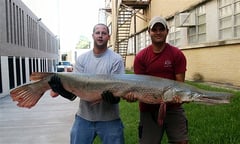
Atractosteus spatulaAlligator Gar
Lepisosteidae · Lacepède, 1803
The alligator gar, Atractosteus spatula, is a gar from the lower Mississippi basin and Gulf Coast states of the south-eastern USA and Mexico. One of the largest freshwater fishes in the world, it reaches a recorded 3050 mm and can live well over 50 years, so it should not be considered a home aquarium subject. Juveniles are seen for sale quite regularly, and a hybrid with Lepisosteus platostomus is known as the 'crocodile gar'.
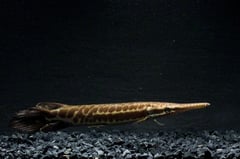
Atractosteus tropicusTropical Gar
Lepisosteidae · Gill, 1863
The tropical gar, Atractosteus tropicus, is a gar from Caribbean and Pacific-slope drainages of Central America, from southern Mexico to Costa Rica. It grows to 1250 mm SL and can live for several decades, so it should not be considered a home aquarium subject, though juveniles are occasionally offered in the trade. Like other gars it can breathe atmospheric air to a certain extent through a modified, vascularised swim bladder.
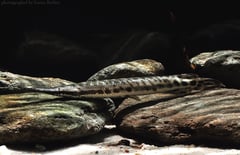
Lepisosteus oculatusSpotted Gar
Lepisosteidae · Winchell, 1864
The spotted gar, Lepisosteus oculatus, ranges from Lakes Erie and Michigan south through the Mississippi basin to the Gulf of Mexico drainages. Given its size and a lifespan of several decades it should not be considered a home aquarium subject, and only some public aquaria can maintain it long-term. A modified, vascularised swim bladder allows it to breathe atmospheric air to a certain extent.
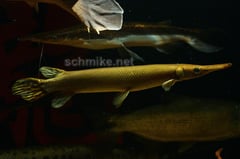
Atractosteus tristoechusCuban Gar
Lepisosteidae · Bloch & Schneider, 1801
The Cuban gar, Atractosteus tristoechus, known locally as 'manjuari', is a gar endemic to western Cuba and Isla de la Juventud. Endangered across most of its range, it grows to 1800 mm SL and lives for several decades, so it should not be considered a home aquarium subject. Captive breeding efforts are well-established, and some public aquaria maintain it long-term.