River
Marañón
Only species with a profile on Seriously Fish are counted.
- Species
- 33
- Families
- 13
- Photographed
- 33 of 33
- Difficulty rated
- 33 of 33
Basin
Also in the Amazon basinspecies recorded from both
Shares fishes with rivers elsewherespecies recorded from both
Runs through
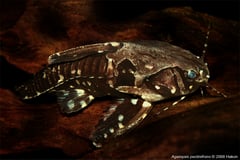
Agamyxis pectinifronsSpotted Talking Catfish
Doradidae · Cope, 1870
The spotted talking catfish, Agamyxis pectinifrons, is a doradid catfish from the Amazon basin in Bolivia, Brazil, Colombia and Peru. Very common in the trade, it is hardy and relatively long-lived, and recommended to beginners and experienced aquarists alike despite its adult size. It closely resembles A. albomaculatus, known only from the Río Orinoco drainage in Venezuela, and the two are probably sold under the same trade names.
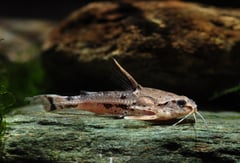
Amblydoras nauticusMarbled Talking Catfish
Doradidae · Cope, 1874
The marbled talking catfish, Amblydoras nauticus, is a small doradid catfish from Peru, described from Nauta in the Peruvian Amazon. It is often still sold as A. hancockii, a name now considered a synonym of Platydoras hancockii. Hardy and tolerant of a wide range of water conditions, it is secretive and rarely seen by day. It makes audible sounds by grinding its pectoral spines in their sockets and by resonating the swim bladder, and its spines tangle easily in nets.

Apistogramma baenschiA188
Cichlidae · Römer, Hahn, Römer, Soares & Wöhler, 2004
The Inca dwarf cichlid, Apistogramma baenschi, is from tributaries of the lower Río Huallaga in the Amazonian portion of northern Peru. Coded A188 under the DATZ system, it is produced on a commercial basis and is perhaps among the most suitable Apistogramma for those new to dwarf cichlids. Wild fish come from shallow forest tributaries with very soft, tea-stained water and a pH measured between 4.1 and 6.3.

Apistogramma bitaeniataTwo-Striped Dwarf Cichlid
Cichlidae · Pellegrin, 1936
The two-striped dwarf cichlid, Apistogramma bitaeniata, ranges across the Peruvian, Colombian and Brazilian Amazon, from the Marañón to the Tapajós. Also known as the banded dwarf cichlid, it occurs in several colour forms depending on locality, loosely grouped as 'red', 'blue', 'orange' and 'yellow' in the hobby. Many locality names are in use for these forms, and several are regularly applied incorrectly.

Apistogramma cacatuoidesCockatoo Cichlid
Cichlidae · Hoedeman, 1951
The cockatoo cichlid, Apistogramma cacatuoides, is a small cichlid from the upper Amazon basin, from the Ucayali in Peru to the Solimões in Brazil. It lives in slow tributaries, backwaters and creeks where leaf litter collects. Numerous line-bred forms such as 'double red' and 'orange flash' are traded, and captive-raised fish suit a community aquarium, while wild fish are best kept alone or with small dither fishes.

Astyanax bimaculatusTwo Spot Astyanax
Characidae · Linnaeus, 1758
The two spot astyanax, Astyanax bimaculatus, is a characid ranging from Panama through most of the Amazon and Orinoco basins. It lives in a wide variety of biotopes, from swiftly-flowing rivers and streams to ponds, ditches and reservoirs. The name is currently applied to what is considered a species complex of at least four taxa, and aquarium fish most often arrive as contaminants among shipments of other species.
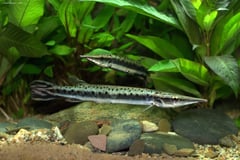
Boulengerella maculata
Ctenoluciidae · Valenciennes, 1850
Boulengerella maculata is a pelagic ctenoluciid found throughout much of the Amazon, Orinoco and Tocantins river systems. Colour pattern varies considerably, with some specimens much paler than others, and this may be correlated with water type. Random dark spots on the upper body, and a dark stripe only behind the eye when one is present, separate it from the similar B. lateristriga. It reaches 329 mm SL and needs an aquarium with base dimensions of 240 by 90 cm or more.
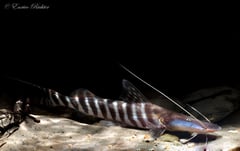
Brachyplatystoma tigrinumZebra Shovelnose
Pimelodidae · Britski, 1981
The zebra shovelnose, Brachyplatystoma tigrinum, is a pimelodid catfish from the upper Amazon basin in Brazil, Colombia and Peru. Adults appear to be obligate inhabitants of main river channels with strong flow, often around cataracts and rapids, and most aquarium fish are juveniles collected around Iquitos in Peru. It is sometimes confused with B. juruense, especially when young, but has a more well-defined colour pattern, a slenderer body and longer barbels.
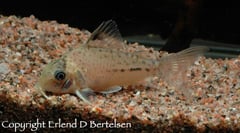
Brochis lambertiC009
Callichthyidae · (Nijssen & Isbrücker, 1986)
Brochis lamberti (C009), long known as Corydoras lamberti, is an armoured catfish known only from the lower Río Pastaza, a tributary of the Río Marañón in Loreto, northern Peru. Similar-looking fish are known from tributaries close to Iquitos, and it is unclear whether these, 'C009' and B. lamberti are the same species. It is rare in the hobby and difficult to identify without collection details, so it may have been traded under other names.
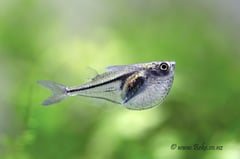
Carnegiella myersiPygmy Hatchetfish
Gasteropelecidae · Fernandez-Yepes, 1950
The pygmy hatchetfish, Carnegiella myersi, is a tiny freshwater hatchetfish from the Peruvian Amazon basin, with a second population in Bolivia. The smallest and most delicate of the nominal hatchetfishes, it has a shallower, rounded keel that gives it an elongate profile. It lives in small, shaded, shallow forest streams and must be kept in a group of at least six, away from active tankmates.
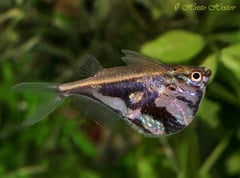
Carnegiella strigataMarbled Hatchetfish
Gasteropelecidae · Günther, 1864
The marbled hatchetfish, Carnegiella strigata, is a hatchetfish from the Amazon and Orinoco basins and coastal rivers of Guyana and Suriname. Popular in the hobby, it is collected for the trade mostly in the rio Negro basin in Brazil. Its larger size and dark, marbled pattern set it apart from congeners, though the pattern varies and the wide range may be open to question. It appears to live only in blackwater.

Colomesus asellusAmazon Puffer
Tetraodontidae · Müller & Troschel, 1849
The Amazon puffer, Colomesus asellus, is a freshwater puffer found throughout much of the Amazon basin, with records north to Guyana and Venezuela. Also traded as the South American puffer or 'SAP', it is told from congeners by a transverse row of dermal flaps across the chin. It lives mostly in well-oxygenated river habitats, is intolerant of organic waste, and forms loose aggregations, so a group of 6 or more is best, away from the general community.
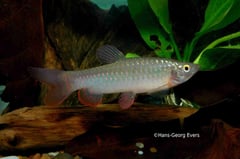
Copeina guttataRed-spotted Tetra
Lebiasinidae · Steindachner, 1876
The red-spotted tetra, Copeina guttata, is a lebiasinid from the middle and upper Amazon basin in Brazil, Peru, Ecuador and Colombia. Reaching 76 mm, it needs a tank of at least 120 x 30 cm. The eggs are apparently deposited in a shallow depression dug in the substrate and guarded by the male. Like many fishes from pristine environments it is intolerant of organic pollutants and requires spotless water.
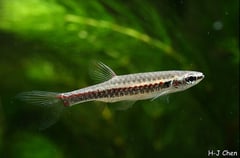
Copella nattereri
Lebiasinidae · Steindachner, 1876
Copella nattereri is a small lebiasinid widespread in the middle and upper Amazon drainage in Peru and Brazil. It is sometimes traded as C. sp. 'red line', 'spotted tetra' or C. nigrofasciata, and its name was long applied to C. callolepis and C. meinkeni. Of the three it alone has a dark lateral stripe, and it has no more than three rows of red spots on the flanks. It inhabits forest streams and flooded forest.
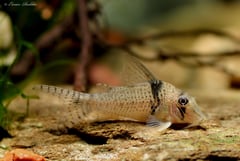
Corydoras pastazensisPastaza Cory
Callichthyidae · Weitzman, 1963
The Pastaza cory, Corydoras pastazensis, is an armoured catfish from the upper Río Pastaza basin in Ecuador and the ríos Ucayali and Puinahua in Peru. The Río Tigre form was raised to species status as C. orcesi, a decision not followed by all authorities. The two are relatively easy to tell apart: in C. pastazensis the dark vertical bar breaks up or tapers off low on the body, and the body is peppered with numerous small dark spots.
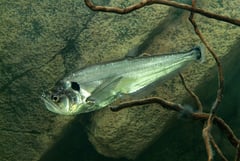
Cynodon gibbus
Cynodontidae · Agassiz, 1829
Cynodon gibbus is a cynodontid from much of the Amazon basin, the middle and lower Orinoco, and the Rupununi River in Guyana. A pelagic fish of main river channels and larger tributaries, it grows to around 280 mm SL. It is rare in the trade but arguably more suitable for the home aquarium than some of its better-known relatives, given its size and relatively docile behaviour. Being easily dominated, it is best kept alone or with similarly sized, non-aggressive fishes.
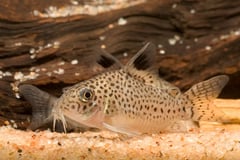
Hoplisoma copei
Callichthyidae · (Nijssen & Isbrücker, 1986)
Hoplisoma copei, long known as Corydoras copei, is an armoured catfish from Peru, apparently endemic to the Río Pastaza basin and possibly the lower Río Marañón. It is not well known and rarely traded. It looks very similar to several congeners, particularly H. acrense and H. cruziense, and little has been written about it since its description.

Hyphessobrycon loretoensisLoreto Tetra
Characidae · Ladiges, 1938
The Loreto tetra, Hyphessobrycon loretoensis, is a small characid from the upper Amazon basin in Colombia, Peru and Ecuador. It is relatively popular in the hobby, but most traded fish are wild-caught, so availability can be sporadic. Most records are from forest streams and minor tributaries with tea-coloured water, overhanging vegetation and leaf litter.

Hyphessobrycon peruvianusPeruvian Tetra
Characidae · Ladiges, 1938
The Peruvian tetra, Hyphessobrycon peruvianus, is a characid known only from the upper Amazon basin in Peru. Popular in the trade, it is sometimes confused with H. loretoensis and H. metae and has repeatedly appeared under the latter name in aquarium literature. A more elongate body, a dark band reaching the tips of the median caudal-fin rays and red markings at the base of both caudal lobes set it apart.
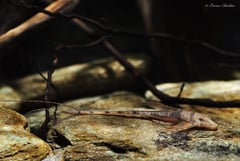
Lamontichthys filamentosusSturgeon Catfish
Loricariidae · La Monte, 1935
The sturgeon catfish, Lamontichthys filamentosus, is a loricariid from the central and western Amazon in Brazil, Peru, Ecuador and Bolivia. Above 60 mm SL the pectoral-fin spine extends into a filament that can be over four times the length of the first branched ray, and the dorsal-fin spine carries a similar extension. Relatively common in the hobby but not easy to maintain, it needs clean, well-oxygenated water and a mature aquarium with plenty of algae-covered surfaces.
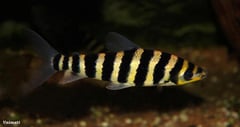
Leporinus fasciatusBanded Leporinus
Anostomidae · Bloch, 1794
The banded leporinus, Leporinus fasciatus, is an anostomid from the Amazon and Orinoco systems and coastal Guyana, Suriname and French Guiana. Young fish are often sold without warning of their size and requirements, and it is fairly ubiquitous in public aquarium displays. It is frequently confused with L. affinis, and its dark body bars multiply with age, from five in young fish to around ten in adults.

Megalamphodus erythrostigmaBleeding Heart Tetra
Characidae · (Fowler, 1943)
The bleeding heart tetra, Megalamphodus erythrostigma, is a characid from the upper Amazon basin where the borders of Brazil, Peru and Colombia meet. The best-known of three similar species in the 'bleeding heart' subgroup, it has the reddish humeral spot found in no other characid. Generally peaceful, although adult males are territorial to an extent, it mostly inhabits sluggish tributaries, side arms and forest lakes.
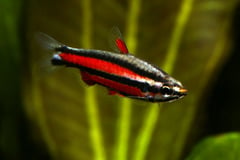
Nannostomus rubrocaudatusPurple Pencilfish
Lebiasinidae · Zarske, 2009
The purple pencilfish, Nannostomus rubrocaudatus, is reportedly collected along the Marañón in Peru, between the Morona and Santiago rivers. Before description it was traded as Nannostomus sp. 'purple' or N. sp. 'coral red II'. Males have red-purple pigmentation between all three dark lateral stripes, and it is more aggressive than most congeners, so it needs a spacious tank with plenty of broken lines of sight.
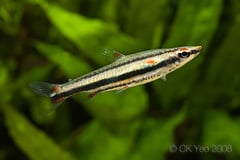
Nannostomus trifasciatusThree-lined Pencilfish
Lebiasinidae · Steindachner, 1876
The three-lined pencilfish, Nannostomus trifasciatus, is a lebiasinid widespread in the western Amazon basin in Brazil, Peru, Colombia and Bolivia. Fairly ubiquitous in the trade, it is less demanding than many congeners and a good choice for a newcomer to pencilfishes. Many fish on sale are farmed, and wild populations vary in colour pattern, one being marketed as 'super red' for its unusually long red stripe.
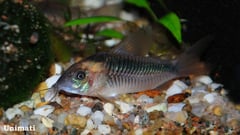
Osteogaster zygataBlack Band Cory
Callichthyidae · (Eigenmann & Allen, 1942)
The black band cory, Osteogaster zygata, long known as Corydoras zygatus, is an armoured catfish from the middle Río Marañón watershed in eastern Ecuador and northern Peru. Also known in the trade as the 'zygus cory', it looks very similar to O. rabauti. In O. zygata the broad dark stripe on the upper body stops short of the lower caudal peduncle, and in O. rabauti it extends onto it.
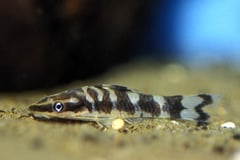
Otocinclus cocamaZebra Oto
Loricariidae · Reis, 2004
The zebra oto, Otocinclus cocama, is a miniature loricariid from Peru, thought to occur throughout the lower Ucayali and Marañon. Vertically elongated blotches from the dorsal midline to the belly distinguish it from all congeners, and it has a complete lateral line. It can be delicate when first imported and benefits from quarantine in a tank with a good biofilm to graze.
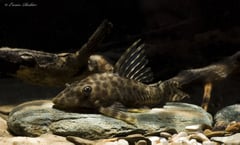
Peckoltichthys bachiL146
Loricariidae · (Boulenger, 1898)
The bola pleco, Peckoltichthys bachi, is a loricariid catfish from the upper Amazon region in Brazil, Colombia, Ecuador and Peru. It has been assigned several L-numbers, including L146 from Colombia and L232 from the Río Putumayo/Içá, and has been exported under other generic names including Hemiancistrus and Sophiancistrus. Its mottled colour pattern separates it from most Peckoltia species, and it lives among submerged grasses and branches in flowing water along the margins of medium to large rivers.

Satanoperca jurupariDemon Eartheater
Cichlidae · Heckel, 1840
The demon eartheater, Satanoperca jurupari, is a cichlid recorded throughout much of the Amazon basin in Brazil, Bolivia, Peru, Ecuador and Colombia. In aquarium literature it is frequently confused with S. leucosticta, which has prominent white spots or vermiform markings on the sides of the head. Its precise identity is a confusing issue, and populations from the Tapajós, Xingu, Araguaia and Paraná are genetically distinct and may represent separate species.
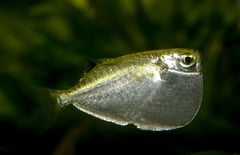
Thoracocharax stellatusSpotfin Hatchetfish
Gasteropelecidae · Kner, 1858
The spotfin hatchetfish, Thoracocharax stellatus, is the most widespread neotropical hatchetfish, recorded from much of South America. It is told from its only congener, T. securis, by a prominent dark spot in the dorsal fin, and is sometimes traded as 'platinum hatchetfish'. It feeds almost entirely on insects, and a tightly fitting cover is needed because it can clear several metres in one jump.
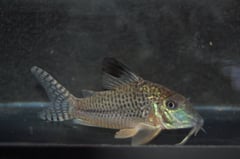
Corydoras acutusBlacktop Cory
Callichthyidae · Cope, 1872
The blacktop cory, Corydoras acutus, is an armoured catfish from the upper Amazon basin in Brazil, Peru, Ecuador and possibly Bolivia. It can be confused with three similar fishes known as C024, C077 and C109. C024 and C109 occur thousands of kilometres outside its range, but C077 lives alongside it in the rio Abunã and is only known to differ in growing smaller. Some specimens lack the dark marking in the dorsal fin.
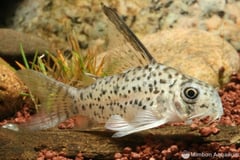
Hoplisoma armatum
Callichthyidae · (Günther, 1868)
Hoplisoma armatum, long known as Corydoras armatus, is an armoured catfish from the Río Huallaga watershed in Peru, to which it may be endemic. Fish from the upper rio Madeira in Brazil and Bolivia have been traded as C. sp. 'dorsalis' and C. sp. 'ogawae' and are officially considered conspecific, although the two areas lie almost 2500 km apart. It can also be confused with H. loretoense but has a deeper body and a longer, slightly curved dorsal-fin spine.
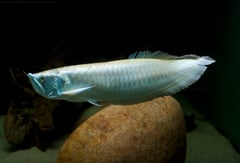
Osteoglossum bicirrhosumSilver Arowana
Osteoglossidae · Cuvier, 1829
The silver arowana, Osteoglossum bicirrhosum, is a large predator from the Amazon basin, plus river systems in Guyana and French Guiana. Reaching 80 cm, it is largely unsuitable for the home aquarium, and although juveniles are readily available, few private aquarists can house an adult long-term. Juveniles have a single dark lateral stripe, while in those of its only congener, O. ferreirai, most of the body and fins are dark.
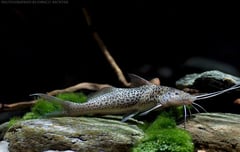
Aguarunichthys torosusBolt Catfish
Pimelodidae · Stewart, 1986
The bolt catfish, Aguarunichthys torosus, is a pimelodid catfish known only from the Río Marañón in the upper Amazon basin of Peru. It probably also occurs in some tributaries draining into Peru from Ecuador. Also traded as 'Jello Band' or 'Yellow Band' catfish, it eats fishes small enough to fit in its mouth and is aggressively territorial towards conspecifics, so is best kept singly among larger, ideally fluvial, species.