River
Tatau
Only species with a profile on Seriously Fish are counted.
- Species
- 3
- Families
- 2
- Photographed
- 3 of 3
- Difficulty rated
- 3 of 3
Shares fishes withspecies recorded from both
Runs through
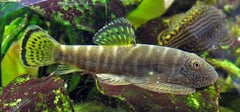
Gastromyzon viriosus
Gastromyzontidae · Tan, 2006
Gastromyzon viriosus is a hillstream loach known only from the Tatau River drainage in central Sarawak, Malaysian Borneo. A dark brown body with 8-10 complete vertical cream bars and a thin, cream, reticulated pattern on the head identify it. It is occasionally seen in the trade, most often in mixed shipments labelled 'Borneo sucker', 'Hong Kong pleco' or 'butterfly loach' regardless of species.
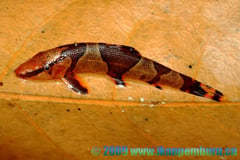
Homaloptera orthogoniataSaddle-back Loach
Balitoridae · Vaillant, 1902
The saddle-back loach, Homaloptera orthogoniata, is a 'lizard' loach endemic to Borneo, known from rivers in Sarawak and Kalimantan. It was historically said to occur across much of Indochina. It is rare in the hobby, and most images online and in the literature show H. confuzona or H. parclitella. It always has three large, saddle-shaped markings on the back, the third between the dorsal and caudal fins.
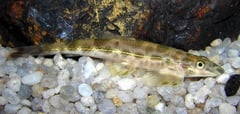
Homalopteroides stephensoni
Balitoridae · Hora, 1932
Homalopteroides stephensoni is a hillstream loach from Borneo, recorded from Kalimantan in Indonesia and from Sabah and Sarawak in Malaysia. Poorly known in the aquarium hobby, it may never have been exported for the ornamental trade. Originally described in Homaloptera, it was placed in Balitoropsis by Kottelat (2012), who subsequently followed Randall and Page (2012) in treating it as a Homalopteroides. Like its congeners it inhabits swiftly-flowing, clear, oxygen-saturated streams.