River
Içana
Only species with a profile on Seriously Fish are counted.
- Species
- 3
- Families
- 3
- Photographed
- 3 of 3
- Difficulty rated
- 3 of 3
Basin
Also in the Amazon basinspecies recorded from both
Shares fishes with rivers elsewherespecies recorded from both
Runs through

Apistogramma elizabethaeA208
Cichlidae · Kullander, 1980
Apistogramma elizabethae is a dwarf cichlid from the rio Uaupés and adjacent rio Içana, both tributaries of the upper rio Negro in Brazil. Coded A208, it is among the more sought-after Apistogramma in the hobby. Içana fish tend to have more blue on the head than those from the Uaupés, a reddish population is traded as A. elizabethae 'super red', and none of the forms should be mixed in aquaria.
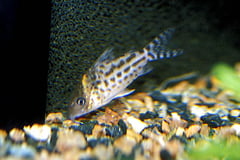
Brochis incolicanaC001
Callichthyidae · (Burgess, 1993)
Brochis incolicana (C001), long known as Corydoras incolicana, is an armoured catfish from the rio Içana in the upper rio Negro basin, northern Brazil. It presumably also occurs in eastern Colombia, where the Içana forms the border. The first fish to receive a 'C' number, in 1993, it was described the same year in a hobbyist magazine and is difficult to identify accurately. The colour pattern is said to be extremely variable, but the dark bar through the eye and the dark marking at the dorsal-fin base are apparently consistent.

Paracheirodon axelrodiCardinal Tetra
Characidae · Schultz, 1956
The cardinal tetra, Paracheirodon axelrodi, is a small characid from the rio Negro and Orinoco drainages of Brazil, Colombia and Venezuela. Immensely popular in the hobby, it is now commercially bred on a large scale, but a significant proportion of trade fish are still wild caught or come from community-led projects such as Project Piaba. Rio Negro and Orinoco populations differ in colour pattern, and wild fish are less tolerant of deteriorating water conditions than commercially-produced ones.