Country · Asia
Bangladesh
Only species with a profile on Seriously Fish are counted, whether native or introduced.
- Species
- 55
- Families
- 17
- Genera
- 36
- Found only here
- 0
- Photographed
- 54 of 55
Shares its fishes withspecies recorded in both
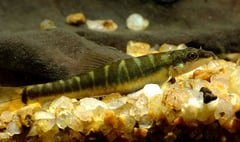
Acoura savonaHalf-banded Loach
Nemacheilidae · (Hamilton, 1822)
The half-banded loach, Acoura savona, is a nemacheilid loach from Ganges tributaries draining the eastern Himalayas in India, Nepal and Bangladesh. The species is seen in the trade fairly often and is sometimes sold as 'bicolor loach' in the United States. Its colour pattern of 9-10 thin, yellowish bars on a dark upper body, with plain whitish lower parts, separates it from similar loaches, and it is among the less aggressive of them.

Badis badisBadis
Badidae · (Hamilton, 1822)
The badis, Badis badis, is a small badid from the Ganges river system in India, Nepal and Bangladesh, with further records in Assam and the Mahanadi. Sometimes sold as the 'chameleon fish' for its ability to change colour rapidly, especially when breeding or stressed, it was one of only two badids popular in the hobby before 2002. Several congeners share its dark cleithral spot and can be hard to tell apart. It is sluggish and retiring, and rival males can be quite aggressive towards one another in confined spaces.

Barilius bendelisis
Cyprinidae · Hamilton, 1807
Barilius bendelisis is a large, fast-swimming cyprinid from India, Bangladesh, Nepal and probably Bhutan. Occasionally sold as 'Indian hill trout' or 'Hamilton's baril', it has 8 to 12 bluish vertical bars and, in adults, a blue-black spot on each scale. It grows to around 200 mm SL and inhabits well-oxygenated, fast-flowing rivers and streams, and its speed and vigorous feeding make it unsuitable for the general community.

Barilius shacra
Cyprinidae · (Hamilton, 1822)
Barilius shacra is a cyprinid from the Himalayan foothills of Nepal and northern India, in the Ganges and Brahmaputra systems, and from Bangladesh. Poorly known in the hobby but exported on occasion, it has around 12 vertical bars on each flank and a black band in the upper third of the dorsal fin. It inhabits well-oxygenated, fast-flowing rivers with gravel, cobble and boulder substrates, and is too fast and vigorous a feeder for the general community.

Barilius vagra
Cyprinidae · (Hamilton, 1822)
Barilius vagra is a cyprinid widely distributed in the Ganges and Brahmaputra river systems of northern India, Nepal and Bangladesh. Poorly known in the hobby but exported on occasion, it has 10 to 14 vertical bars on each flank that do not extend below the lateral line. It inhabits well-oxygenated, fast-flowing rivers and tributaries with gravel, cobble and boulder substrates, and its speed and vigorous feeding make it unsuitable for the general community.
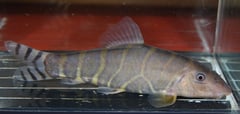
Botia darioBengal Loach
Botiidae · (Hamilton, 1822)
The Bengal loach, Botia dario, is a botiid loach from the middle to lower Ganges and Brahmaputra drainages in northern India, Bangladesh and Bhutan. Its yellow to golden body carries 7-9 dark bars with thinner, lighter bars between, and its particularly curved head makes it among the most easily recognisable in the genus. Botia macrolineata, described from aquarium fish shipped via Bombay, represents the same species. It is among the botiids produced commercially using hormones.
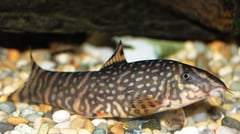
Botia rostrata
Botiidae · Günther, 1868
Botia rostrata is a botiid loach from the lower Ganges and middle to lower Brahmaputra basins in northern India and Bangladesh. Traded as the 'Gangetic loach', 'twin-banded loach' or 'ladder loach', almost all fish sold under the name are B. sp. 'upper Brahmaputra', and B. rostrata sensu stricto is rarely, if ever, available. Juveniles carry 9-10 dark body bars, usually in pairs, which break up to differing extents as the fish grow.

Butis butisCrazy Fish
Butidae · (Hamilton, 1822)
The crazy fish, Butis butis, is a flathead gudgeon of coastal and brackish waters across the Indo-Pacific, from eastern Africa to Fiji. The most commonly traded member of the genus, it has many other names, including crocodile fish, duckbill sleeper and upside-down sleeper. A nocturnal ambush predator, it often swims upside-down, and it is territorial and not sociable with conspecifics, so is best kept singly.
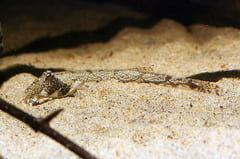
Canthophrys gongotaMoose-faced Loach
Cobitidae · (Hamilton, 1822)
The moose-faced loach, Canthophrys gongota, is a cobitid loach from the Ganges and Brahmaputra river systems in Nepal, northern India and Bangladesh. Often referred to as Somileptes gongota in aquarium literature, it is rarely seen in the trade, being notoriously delicate and difficult to ship. It mostly inhabits slow-moving, shallow tributaries and minor rivers over mud, sand or gravel.

Chagunius chagunio
Cyprinidae · (Hamilton, 1822)
Chagunius chagunio is a large cyprinid endemic to the Ganges and Brahmaputra river basins in northern India, Nepal and Bangladesh. Growing to 400-450 mm, it can only be considered suitable for public aquaria and a very small minority of private aquarists. Rarely seen in the trade, it looks almost identical to C. baileyi and C. nicholsi but has more circumferential and circumpeduncular scales.
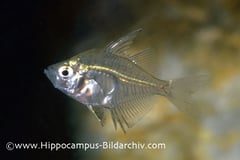
Chanda rangaIndian Glass Fish
Ambassidae · Hamilton, 1822
The Indian glass fish, Chanda ranga, is a small ambassid from South and Southeast Asia, with translucent skin that shows its bones and organs. For many years it was injected with luminous dyes on Asian fish farms and sold as 'painted' glass fish, and most injected fish do not survive more than a few months. It is found most often in freshwater, frequently soft and acidic, and needs no added salt. Parambassis lala and C. siamensis are often imported under its name.

Channa gachuaDwarf Snakehead
Channidae · (Hamilton, 1822)
The dwarf snakehead, Channa gachua, is a snakehead recorded across an enormous range from Iran to Taiwan and Bali. There is significant evidence that C. gachua as currently understood is a complex of similar-looking species in need of taxonomic review. A mouthbrooder bred regularly in captivity, it can share a well-chosen community with peaceful fishes too large to be prey, but populations should not be mixed as some may hybridise.
Channa stewartiiAssamese Snakehead
Channidae · (Playfair, 1867)
The Assamese snakehead, Channa stewartii, is a snakehead of the C. gachua group from the Brahmaputra and Ganges basins of India, Bangladesh and Nepal. It is also listed from Bhutan and Myanmar and grows to about 30 cm TL. Keepers give it a cooler winter of about 16-18 °C, it is aggressive towards its own kind, and the male broods the eggs in his mouth.

Chela cachiusNeon Hatchet Fish
Cyprinidae · (Hamilton, 1822)
The neon hatchet fish, Chela cachius, is a deep-bodied cyprinid mostly recorded from the Ganges and Brahmaputra systems of India and Bangladesh. Its extremely deep body means it is unlikely to be confused with any related species, and it is the only valid member of the genus. A habitat generalist, it is an active schooling fish that is best kept in a group of at least 8-10 in a tank with a tightly-fitting cover, since it is an accomplished jumper.

Crossocheilus latius
Cyprinidae · (Hamilton, 1822)
Crossocheilus latius is a cyprinid widespread in India, described from the Tista River on the border with Bangladesh. It lives everywhere from boulder-strewn Himalayan hill streams to silt-laden tributaries and pools. Not often available in the trade, it sometimes turns up in shipments of Indian Garra, and its relatively plain pattern makes it unlikely to be confused with congeners. Juveniles are gregarious and active, but adults tend to become sedentary and solitary.

Ctenops nobilisFrail Gourami
Osphronemidae · McClelland, 1845
The frail gourami, Ctenops nobilis, is an anabantoid from the Ganges and Brahmaputra systems in northeastern India, Bangladesh and Nepal. The only recognised member of its genus and a paternal mouthbrooder, it is usually regarded as very difficult to keep but is quite adaptable once acclimatised. It appears to react poorly to export and shipping, so imports are often in poor condition and prone to Oödinium. Adults can be openly hostile towards conspecifics.
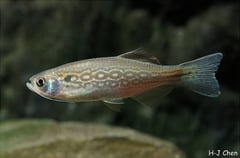
Danio dangilaMoustached Danio
Cyprinidae · (Hamilton, 1822)
The moustached danio, Danio dangila, is a cyprinid from the Ganges and Brahmaputra drainages, with most records from Nepal, India and Bangladesh. The common name refers to its exceptionally long barbels, and despite its apparent abundance in nature it remains uncommon in the hobby. Its constant activity can upset slow-moving or timid tankmates, so it suits larger tanks with similarly-sized fishes, and adult size appears to vary by population from 60 to 130 mm.

Danio rerioZebra Danio
Cyprinidae · (Hamilton, 1822)
The zebra danio, Danio rerio, is a small cyprinid from India and Bangladesh, found mostly in slow or still pools and mature rice paddies. Peaceful, hardy and inexpensive, it has been mass-produced for many years and quality stock can be hard to find. The spotted 'leopard danio' is a spontaneous mutation of the striped form that also occurs in the wild.

Dario kajal
Badidae · Britz & Kullander, 2013
Dario kajal is a tiny badid from the Meghna drainage, described from the Jaintia Hills of Meghalaya, India, and also found in Bangladesh. It was referred to as Dario sp. 'Jaintia Hills' or D. sp. 'Bangladesh' before its description, and its name alludes to its prominent orbital stripes. Males have bars arranged in pairs on the upper half of the body, and given its rarity it is best kept alone with the emphasis on captive reproduction.

Datnioides polotaSilver Tiger Perch
Datnioididae · (Hamilton, 1822)
The silver tiger perch, Datnioides polota, is a tiger perch widely distributed in southeastern Asia, from India and Bangladesh east to Indonesia. Mostly found in brackish habitats such as estuaries, mangroves and coastal lagoons, it has a highly variable colour pattern with up to 7 dark bars. The name D. quadrifasciatus is sometimes applied to it, but that name is a junior homonym and polota takes precedence.
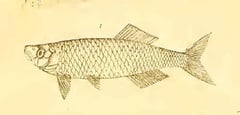
Devario aequipinnatus
Cyprinidae · (McClelland, 1839)
Devario aequipinnatus is a striped devario from hill streams in northeastern India, Bangladesh and Nepal. It is recognised by three straight dark stripes along each side, of which the middle one is widest. The name was long applied to almost any striped Devario, including the commercially bred giant danio, which is covered here under D. malabaricus.

Devario devarioBengal Danio
Cyprinidae · (Hamilton, 1822)
The Bengal danio, Devario devario, is a devario from the Ganges and Brahmaputra river systems in northern India, Nepal and Bangladesh. Also known as the 'Sind danio', it is told apart from congeners by a single, interrupted lateral stripe on each flank. It is relatively common in the trade and produced commercially, with an albino form and a short-bodied variant sometimes sold as D. sp. 'mini Putao'.

Esomus danricaFlying Barb
Cyprinidae · (Hamilton, 1822)
The flying barb, Esomus danrica, is a cyprinid with an enormous range across Pakistan, Nepal, Bangladesh, most of India, Myanmar and Sri Lanka. It shows a marked preference for shallow, slow-moving and standing waters such as rice paddies with dense vegetation, and is generally absent from major river channels. Reports on its suitability for community aquaria are mixed, with some keepers seeing a pronounced tendency to nip fins.

Labeo bogaViolet Shark
Cyprinidae · (Hamilton, 1822)
The violet shark, Labeo boga, is a cyprinid from most major river systems in India, Pakistan, Nepal, Bangladesh and Myanmar. It inhabits major river channels and larger tributaries and grows to 250 mm, needing a tank of at least 240 x 60 cm. It is unsuitable for most home aquaria but turns up in the trade irregularly, also as the 'violet-gilled shark' or 'blushing violet shark'. L. boga as currently recognised probably represents a complex of closely-related species.

Laubuka laubucaIndian Glass Barb
Cyprinidae · (Hamilton, 1822)
The Indian glass barb, Laubuka laubuca, is a cyprinid probably endemic to the Ganges-Brahmaputra system in northern India, Bangladesh and Nepal. Traditionally considered to occur across the Indian subcontinent and most of Southeast Asia, it appears to be far more restricted, and many fish in the trade are probably L. siamensis. L. laubuca has a roundish, ocellated humeral spot and a thin, less conspicuous stripe interrupted by vertical markings. Other names include 'Indian hatchet fish' and 'winged danio'.
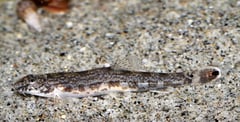
Lepidocephalichthys annandalei
Cobitidae · Chaudhuri, 1912
Lepidocephalichthys annandalei is a cobitid loach from the mid-to-lower Ganges and Brahmaputra systems in Nepal, Bangladesh and north-east India. Rarely traded, it has been sold as L. sp. 'peacock', presumably for its caudal-fin pattern of two dark v-shaped markings, unique within the genus. Fish in the trade differ slightly from the original description, in particular lacking a notched caudal fin.
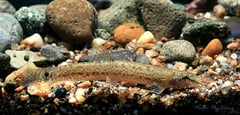
Lepidocephalichthys berdmorei
Cobitidae · (Blyth, 1860)
Lepidocephalichthys berdmorei is a cobitid loach found across Myanmar, Thailand, Laos, north-eastern India and Bangladesh. One of the most frequently-traded members of the genus, it is an excellent choice for those new to keeping loaches. Unlike most congeners it shows a preference for headwaters and streams with clear, flowing water, and its larger adult size separates it from the similar L. thermalis.
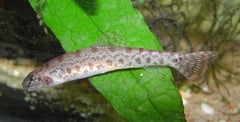
Lepidocephalichthys goalparensis
Cobitidae · Pillai & Yazdani, 1976
Lepidocephalichthys goalparensis is a cobitid loach from the Brahmaputra, Ganges and upper Irrawaddy basins in India, Nepal, Bangladesh and Myanmar. Rarely seen in the hobby, it was imported into the UK in late 2011 as bycatch among mastacembelid eels from northern India, and the identification was confirmed by Justin Havird. The forked caudal fin normally carries four or five broad, dark V-shaped bars.
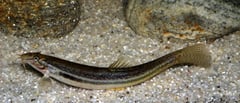
Lepidocephalichthys guntea
Cobitidae · (Hamilton, 1822)
Lepidocephalichthys guntea is a cobitid loach from the Ganges and Brahmaputra systems of northern India, Nepal and Bangladesh, and much of Myanmar. One of the most frequently-traded members of the group, it is an excellent choice for those new to keeping loaches. Males carry a solid, dark lateral stripe and females spotted flanks, and patterning varies with origin. It is also used as a food fish, eaten fresh and dried.
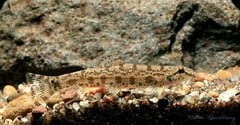
Lepidocephalichthys micropogon
Cobitidae · (Blyth, 1860)
Lepidocephalichthys micropogon is a cobitid loach from Myanmar, western Thailand, Bangladesh and Assam, India. Known from the Salween, Sittaung, Irrawaddy and Brahmaputra drainages and occasionally exported as bycatch, it grows to 55 mm SL and has a strongly forked caudal fin with broad, dark V-shaped bars. Kottelat (2012) treats L. manipurensis as a synonym, though Havird and Page (2010) list the two separately.
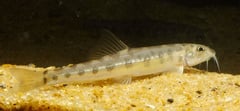
'Nemacheilus' corica
Nemacheilidae · (Hamilton, 1822)
Nemacheilus corica is a loach from Himalayan foothill rivers of the Ganges and Brahmaputra systems in Nepal, northern India and Bangladesh. Usually referred to Schistura in the hobby, it has been placed in Nemacheilus by most authors since the late 1970s, though its generic placement requires further study. A row of variably sized dark spots runs along the back and another along each flank, both ending in a dark blotch at the caudal-fin base.

Opsarius barna
Cyprinidae · (Hamilton, 1822)
Traded as 'striped hill trout' or 'banded hill trout', Opsarius barna is a cyprinid from the Ganges and Brahmaputra basins in northern India. It is thought to also occur in the Mahanadi and in river systems in Nepal, Bhutan, Bangladesh and Rakhine State, Myanmar, in well-oxygenated, fast-flowing rivers over gravel, cobbles and boulders. An extremely fast swimmer and vigorous feeder, it is unsuitable for the general community.

Oreichthys cosuatis
Cyprinidae · (Hamilton, 1822)
Oreichthys cosuatis is a small cyprinid probably restricted to the Ganges and Brahmaputra River basins in Nepal, India and Bangladesh. Several undescribed Oreichthys spp. from India, Myanmar and Thailand continue to be traded under its name, and apparent records from those places likely represent other species. It lacks a black blotch on the caudal peduncle, and adults have a dark triangular blotch in the anal-fin.

Oryzias dancenaIndian Ricefish
Adrianichthyidae · (Hamilton, 1822)
The Indian ricefish, Oryzias dancena, is widely distributed through eastern and southern India, Sri Lanka, Bangladesh and Myanmar. Mostly coastal but adaptable, it has been collected from strongly brackish mangrove swamps to acidic freshwater forest streams. It continues to be misidentified as O. melastigma, a name most recent workers consider invalid, or as O. javanicus, a valid but distinct taxon.

Pethia conchoniusRosy Barb
Cyprinidae · (Hamilton, 1822)
The rosy barb, Pethia conchonius, is a small cyprinid found from Pakistan throughout India, Nepal and Bangladesh. Generally considered one of the hardiest small cyprinids in the hobby, it is an excellent choice for newcomers. Wild specimens are not usually available and the vast majority are commercially bred, with long-finned, 'veil-tail', 'super red', 'neon' and 'golden' strains among the forms selective breeding has produced. Feral populations exist in several countries.

Pethia geliusGolden Dwarf Barb
Cyprinidae · (Hamilton, 1822)
The golden dwarf barb, Pethia gelius, is a small cyprinid native to the Ganges and Brahmaputra river drainages of northern India and Bangladesh. Records suggest a wider range, including Tamil Nadu and the Ayeyarwady delta in Myanmar, though the latter may warrant investigation. Knight (2013) settled its identity, revalidating P. canius and describing P. aurea, both previously treated as phenotypes of P. gelius. Very peaceful but timid, it does best alone or with other diminutive species.

Pethia phutunioDwarf Barb
Cyprinidae · (Hamilton, 1822)
The dwarf barb, Pethia phutunio, is a small cyprinid from the lower Ganges and Brahmaputra river basins in Bangladesh and India. Frequently misidentified and quite rare in the trade, it is sometimes called 'spotted-sail barb' or 'spotted-tail barb'. Several congeners share its two black flank blotches, but it is smaller than all of them at 25 to 30 mm. It inhabits sluggish rivers, streams, ponds and swamps, often over deep mud or silt.

Pethia tictoTicto Barb
Cyprinidae · (Hamilton, 1822)
The ticto barb, Pethia ticto, is a small cyprinid widely distributed through most of the Indian subcontinent, from Pakistan and Nepal to Bangladesh. Its name is frequently misapplied to P. padamya in aquarium literature, though P. ticto is much the less colourful fish and males lack reddish-orange pigmentation on the body. Morphology and colour pattern vary by population, and some populations have already been described as distinct species.

Puntius cholaSwamp Barb
Cyprinidae · (Hamilton, 1822)
The swamp barb, Puntius chola, is a cyprinid from much of Pakistan, India, Nepal, Bhutan, Bangladesh, Sri Lanka, Myanmar and western Thailand. Sometimes called the 'chola' or 'green' barb, it has a single pair of barbels and dark blotches behind the operculum and near the caudal-fin base. It apparently prefers stiller waters over mud or silt, and makes an ideal addition to a peaceful community of riverine fishes.

'Puntius' guganioGlass Barb
Cyprinidae · (Hamilton, 1822)
The glass barb, Puntius guganio, is a small cyprinid widespread in the Ganges and Brahmaputra river systems of Bangladesh, Nepal and northern India. It lives in slow-moving or standing waters such as pools, ditches and minor rivers. Poorly known in the hobby, it is of uncertain taxonomic placement, and its stiff, serrated last dorsal-fin ray, incomplete lateral line and 36-39 lateral scales are shared only with 'P.' nangalensis.

Puntius terioOnespot Barb
Cyprinidae · (Hamilton, 1822)
The onespot barb, Puntius terio, is a cyprinid widely distributed from Pakistan through northern India, Nepal and Bangladesh. Its range covers parts of the Indus, Ganges and Brahmaputra drainages, where it apparently prefers stiller waters over mud or silt. Populations vary in colour pattern to an extent, but all share a diffuse yellow-golden marking on the operculum and a dark spot on the caudal peduncle.

Trichogaster chunaHoney Gourami
Osphronemidae · (Hamilton, 1822)
The honey gourami, Trichogaster chuna, is a labyrinth fish from the Ganges and Brahmaputra systems of India and Bangladesh, with records from Nepal. Virtually all fish on sale are commercially produced, and ornamental strains such as 'red', 'sunset' and 'golden' exist. Slow-moving and easily outcompeted, it needs peaceful tankmates and does best in a group of four to six.

Xenentodon cancilaFreshwater Needlefish
Belonidae · (Hamilton, 1822)
The freshwater needlefish, Xenentodon cancila, is a belonid from Pakistan east through India, Bangladesh, Nepal, Sri Lanka, Myanmar and Thailand. Often called 'freshwater garfish', it only superficially resembles the true gars, and most of its relatives in the Belonidae are marine or estuarine. A near-exclusive inhabitant of the upper water column, it is surprisingly peaceful with anything too large to swallow and is best kept in numbers of four or more, in a tank of 180 ∗ 60 cm or more.

Anabas testudineusClimbing Perch
Anabantidae · (Bloch, 1792)
The climbing perch, Anabas testudineus, is a labyrinth fish found from Pakistan and Sri Lanka east to southern China, Indonesia and Singapore. It lives in almost every kind of lowland water from rice paddies to main river channels, and can cross several hundred metres of land provided it stays moist. Its taxonomy is confused, and additional taxa probably exist. Its size and predatory nature make it unsuitable for the general community.

Bagarius yarrelliGoonch
Sisoridae · Sykes, 1839
The goonch, Bagarius yarrelli, is a very large sisorid catfish recorded from the Indus in Pakistan east through Indochina to Sumatra and Borneo. Also known as the 'giant devil catfish' and 'sand shark', it reaches 1300 to 2000 mm and is fished for food across much of its range. That wide distribution appears doubtful, and Indian and Southeast Asian populations may prove not to be conspecific. It lives among boulders in the fast, turbulent rapids of large rivers.

Brachygobius nunus
Gobiidae · (Hamilton, 1822)
Brachygobius nunus is a bumblebee goby described from the Ganges delta near Kolkata, more likely restricted to India, Bangladesh and Sri Lanka. Reports of its wider range vary, and it may also occur in Myanmar. The name is widely misapplied to B. doriae and B. sabanus, which may give a false impression of its availability, though it looks completely different, with four black bands on the body and a black stripe through the eye. It lives in fresh and brackish lowland coastal habitats.
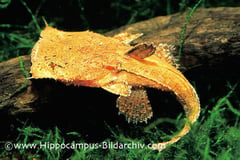
Chaca chacaFrogmouth Catfish
Chacidae · authority not recorded
The frogmouth catfish, Chaca chaca, is an ambush predator from still and slow-moving waters in India, Nepal, Bangladesh and Indonesia. Also known as the angler catfish, it lies hidden among leaf litter and mulm and moves its barbels like a worm to lure prey, which can be almost as big as itself. It is usually lighter than C. bankanensis and has small hooklets on the lower lip and body that its relative lacks.

Channa maruliusBullseye Snakehead
Channidae · (Hamilton, 1822)
The bullseye snakehead, Channa marulius, is a large snakehead recorded from Pakistan across southern Asia to southern China, Laos and Vietnam. Also called the 'giant', 'cobra' or 'Indian' snakehead, it is widely accepted to represent a complex of related species in need of further research. Reports of 120-180 cm remain to be proven, with 500-600 mm a more common adult size, and it is suitable only for public installations or the very largest private aquaria.

Chitala chitalaIndian Featherback
Notopteridae · (Hamilton, 1822)
The Indian featherback, Chitala chitala, is a very large notopterid probably restricted to Pakistan, India, Nepal and Bangladesh. Its name has been widely misapplied in the trade, most often to the Southeast Asian C. ornata, but it is very rarely exported for aquaria and is fished and cultured for food in India. Growing to 1220 mm SL, it has non-ocellated black spots above the anal fin and is the only Chitala normally showing gold or silver bars on the back.

Ctenopharyngodon idellaGrass Carp
Cyprinidae · (Valenciennes, 1844)
The grass carp, Ctenopharyngodon idella, is a large cyprinid native to the Amur River system in eastern Russia and northeastern China. Adults typically reach 800 to 1200 mm, making it a wholly unsuitable aquarium subject, though an albino form is traded. Widely introduced for aquaculture and weed control, it has caused serious damage to natural waters, and unwanted fish should never be released.

Notopterus notopterusBronze Featherback
Notopteridae · (Pallas, 1769)
The bronze featherback, Notopterus notopterus, is an air-breathing notopterid from the Indian subcontinent and Southeast Asia. Also called 'Asian knifefish' or 'ghost knifefish' in the trade, it grows to 600 mm and arguably has no place in the ornamental hobby given its adult size and specialised requirements. The single species in Notopterus is likely to represent a complex of closely-related species.

Gymnostomus ariza
Cyprinidae · (Hamilton, 1807)
Gymnostomus ariza is a cyprinid widely distributed from the Indus basin in Pakistan through India, Bangladesh and Myanmar. Growing to around 300 mm SL, it inhabits flowing streams and tributaries with clear water. It has a confusing taxonomic history, having been placed in Bangana, Cirrhinus and Labeo in recent years. It breeds in temporarily-inundated zones in the wet season and is also produced commercially for food.

Labeo angra
Cyprinidae · (Hamilton, 1822)
Labeo angra is a benthic cyprinid from Pakistan, Nepal, northern India, Bangladesh and Myanmar, described from the Brahmaputra. It can be identified by a brownish back, yellowish flanks and belly, and a black to bluish stripe from the eye to the caudal-fin base. It undertakes annual spawning migrations within its native river systems.

Labeo calbasuOrangefin Labeo
Cyprinidae · (Hamilton, 1822)
The orangefin labeo, Labeo calbasu, is a large cyprinid from Pakistan, Nepal, India, Bangladesh, Myanmar and southern China. Growing to 800 mm, it is an important food and game fish across its native range and is not a suitable subject for the home aquarium. It is known as 'black rohu' in parts of India and Bangladesh, and inhabits the lower reaches of major rivers, lakes and reservoirs.

Bagarius bagarius
Sisoridae · (Hamilton, 1822)
Bagarius bagarius is a sisorid catfish with a wide but disjointed recorded range, from the Indus in Pakistan east to the Mekong and Malay Peninsula. Its identity is confused: the name has been widely applied to a small fish said to reach only 200 mm SL, but it may be the only Bagarius in the Indian subcontinent, in which case it can reach 2 metres. It is mostly collected from fast, turbulent rapids in larger rivers, where it shelters among boulders, and is best kept alone.