Mayaheros urophthalmus
Mayan Cichlid
Formerly Cichlasoma urophthalmus
Last revised 2026Edit this page
On this page11 sections
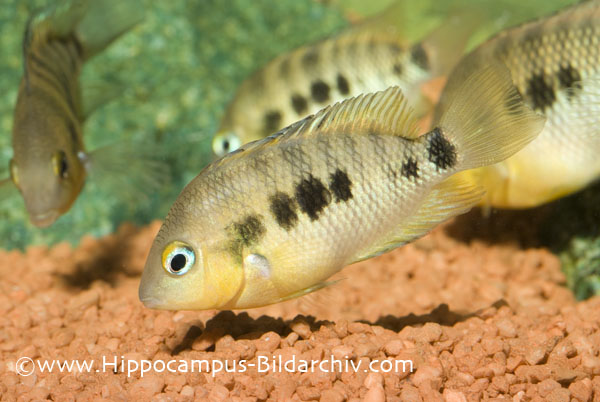
Quick factsEdit
Difficulty5 of 8 measures
Rated difficult because it needs a tank at least 2 m long.
- Space
- very large tank
- Water
- needs a steady pH
- Temp
- flexible
- Diet
- unknown
- Temperament
- territorial
- Social
- unknown
- Compatibility
- unknown
Other demands
Each of these can raise the rating on its own, whatever the measures above say.
- Hardiness
- hardy
- Needs a tank at least 2 m long
The Mayan cichlid, Mayaheros urophthalmus, is a large cichlid native to eastern parts of Mexico, Belize, Guatemala, Honduras and Nicaragua. Also known as the Mexican mojarra, it lives in swamps, marshes and coastal lagoons, can tolerate and even breed in full marine conditions, and is often seen spawning around mangroves. Territorial and fairly aggressive, it is regarded as a potential pest fish in the USA, where introduced populations exist. It is still often sold as Cichlasoma urophthalmus.
Distribution
EditHabitat
Write a noteEditChiefly inhabits coastal plains and surrounding lowlands, where it lives in lethargic waters such as swamps, marshes or large ponds. It can also tolerate brackish conditions and is often seen living and even spawning around mangrove swamps and coastal lagoons.
Aquarium size
Write a noteEdit210 ∗ 60 ∗ 60 cm84 ∗ 24 ∗ 24 in - ~756 litres~200 US gal
Maintenance
Write a noteEditCan be kept in fresh water but actually appreciates brackish conditions. Make sure there is a lot of swimming area for this species, but also provide cover in the form of stable rocks and bits of wood. It is a known digger so plants won't last long, and because of its size potted plants likely won't either. Floating plants are an option, as are plants rooted to bits of wood or rock.
Water conditions
EditTemperature: 20 – 30 °C68 – 86 °F
pH: 7.0 - 8.0
Hardness: Up to 20°H
These recommendations come from this profile’s own figures. They contain affiliate links, so we may earn a commission.
Diet
Write a noteEditIn nature it feeds primarily on aquatic invertebrates although stomach analyses of wild specimens has shown that it also ingests a fair amount of algae and other plant matter. It's unknown if the fish in question had consumed these directly or via the gut contents of other prey items. Not a fussy eater in captivity. Feed a good cichild pellet as a staple diet supplemented with meaty foods such as prawn and mussel.
Behaviour and compatibility
Write a noteEditTerritorial and fairly aggressive. This species is only suitable for a community of medium to large fish, such as other cichlids, robust charcins and catfish. There is no guarantee of success in trying this approach however, the more fish in the tank, the more the aggression is likely to be dispersed. Ensure sufficient decor is provided to allow all the fish to claim a territory.
Can also be kept as a species only tank with a bonded pair.
Sexual dimorphism
Write a noteEditReproduction
Write a noteEditFew details of breeding in the hobby but likely to be similar to cichlasoma species and their relatives.
Notes
EditA hardy and robust fish that can tolerate and breed in full marine conditions. The Mayan cichlid is also referred to as the Mexican Mojarra and is occasionally offered for sale in the UK, or can be obtained through specialist cichlid dealers.
This species is regarded as a potential pest fish in the USA due to its tolerance of a wide range of conditions and the threat it could pose to native fauna.
Species images · 1
These photographs are used with each photographer's permission.
Send a photographHow the name has changed
Moved from Cichlasoma urophthalmus to Mayaheros urophthalmus.
Distribution
Profile completeness20 of 24
83% complete
Also missing: etymology.
Community
Questions about Mayaheros urophthalmus?
Ask on Discord