River
Negro (Uruguay)
Only species with a profile on Seriously Fish are counted.
- Species
- 4
- Families
- 4
- Photographed
- 4 of 4
- Difficulty rated
- 4 of 4
Basin
Shares fishes withspecies recorded from both
Runs through
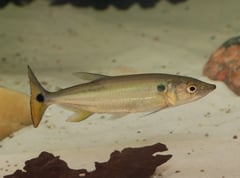
Acestrorhynchus pantaneiroPantanal Barracuda Tetra
Acestrorhynchidae · Menezes, 1992
The Pantanal barracuda tetra, Acestrorhynchus pantaneiro, is a predatory acestrorhynchid from the Paraná, Uruguay and de la Plata basins. It also occurs in the rio Mamoré in Bolivia. A member of the A. lacustris group with a round humeral spot, it is virtually impossible to tell from its relatives in the trade unless collection data is known. It lives in open water, and a group must be of comparable size because acestrorhynchids are cannibalistic.

Apistogramma borelliiBorelli's Dwarf Cichlid
Cichlidae · (Regan, 1906)
Borelli's dwarf cichlid, Apistogramma borellii, is from southern Brazil, Paraguay, Argentina and Uruguay. Also known as the umbrella or yellow dwarf cichlid, it occurs in creeks and tributaries of the rio Paraguay, lower rio Paraná and Uruguay systems. Captive-raised fish are the recommended choice for the community aquarium, while wild examples are best kept alone or with small dither fishes.
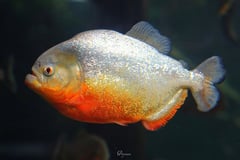
Pygocentrus nattereriRed Bellied Piranha
Serrasalmidae · Kner, 1858
The red bellied piranha, Pygocentrus nattereri, occurs through much of the Amazon basin and south into the Paraná and Uruguay river systems. Famed as a rapacious predator, it is among the most notorious freshwater fishes in the world. According to Herbert Axelrod (1976), the myth began with a feeding frenzy staged for Theodore Roosevelt in Brazil in 1913. Usually only juveniles form aggregations, and the species is relatively easy to breed in the aquarium.
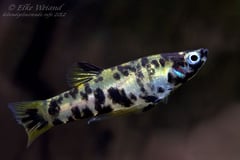
Phalloceros caudimaculatusDusky Millions Fish
Poeciliidae · (Hensel, 1868)
The dusky millions fish, Phalloceros caudimaculatus, is a small livebearer native to Brazil, Paraguay, Uruguay and Argentina. Feral populations in Australia, New Zealand, Ethiopia and Malawi were purportedly introduced for mosquito control and are now considered invasive. Highly variable in colour pattern, it is known in the hobby in spotted and golden ornamental forms. P. caudimaculatus is the type species of a genus that was monotypic until 21 new species were described in 2008.